The Growth Conference – Thursday Recap

It is obvious that the most successful banks today have a clear understanding of, and laser-like focus on, their markets, strengths and opportunities.  One big takeaway from the first full day of Bank Director’s Growth Conference (#BDGrow14 via @bankdirector): banking is absolutely an economies of scale business.
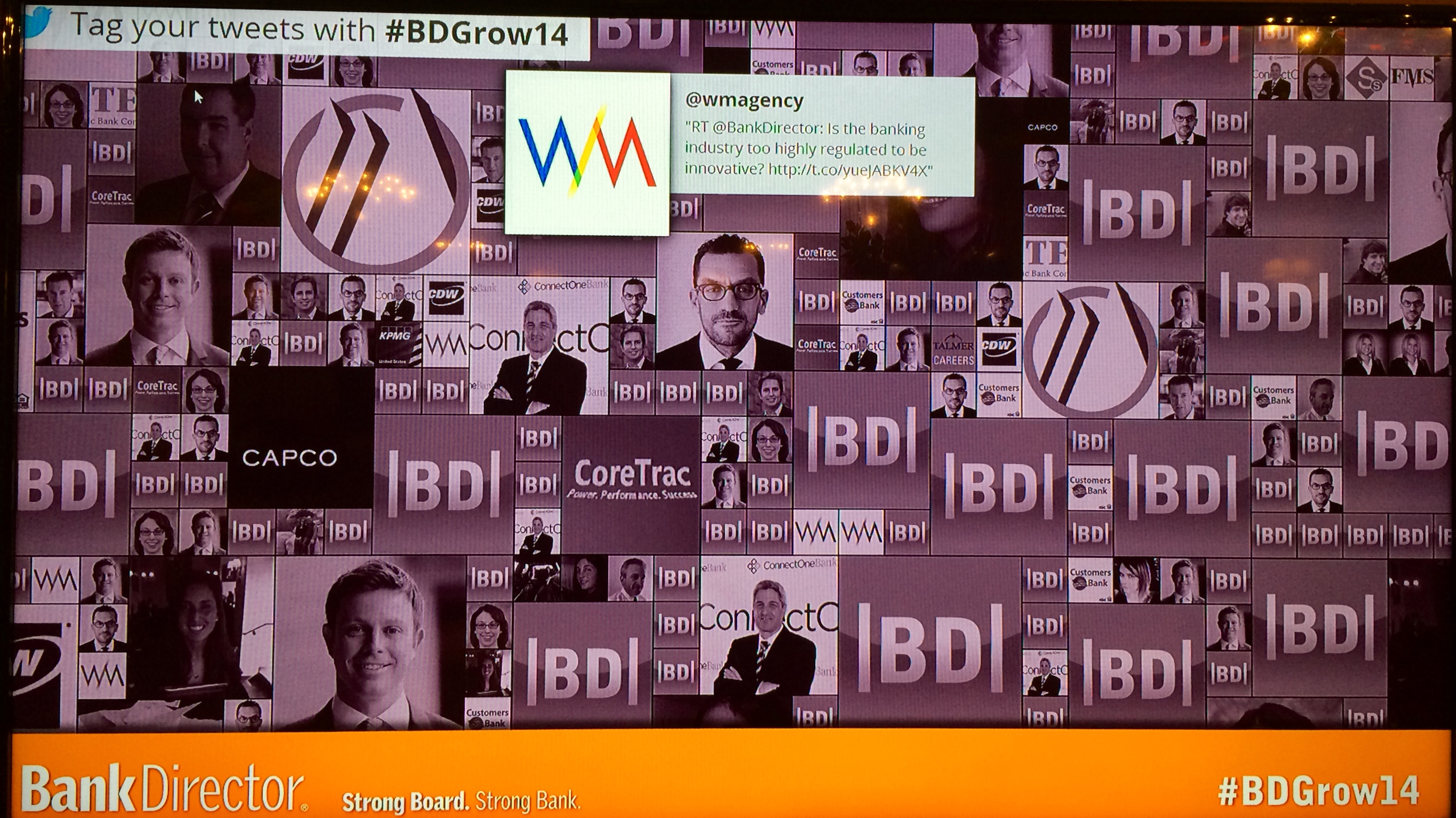
photo-7

A 2 Minute Recap


Creating Revenue Growth

At events like these, our Publisher, Kelsey Weaver, has a habit of saying “well, that’s the elephant in the room” when I least expect it.  Today, I took her quip during a session about the strategic side of growth as her nod to the significant challenges facing most financial institutions — e.g. tepid loan growth, margin compression, higher capital requirements and expense pressure & higher regulatory costs.  While she’s right, I’m feeling encouraged by anecdotes shared by growth-focused bankers considering (or implementing) strategies that create revenue growth from both net interest income and fee-based revenue business lines. Rather than lament the obstacles preventing a business from flourishing, we heard examples of how and why government-guaranteed lending, asset based lending, leasing, trust and wealth management services are contributing to brighter days.

Trending Topics
Overall, the issues I took note of were, in no particular order: bank executives and board members need to fully embrace technology; there is real concern about non-bank competition entering financial services; the board needs to review its offerings based on generational expectations and demands;  and those that fail to marry strategy with execution are doomed. Lastly, Tom Brown noted that Bank of America’s “race to mediocrity” actually makes it an attractive stock to consider.  Who knew being average can pay off?

##

To comment on this piece, click on the green circle with the white plus (+) sign on the bottom right.  More tomorrow from the Ritz-Carlton New Orleans.
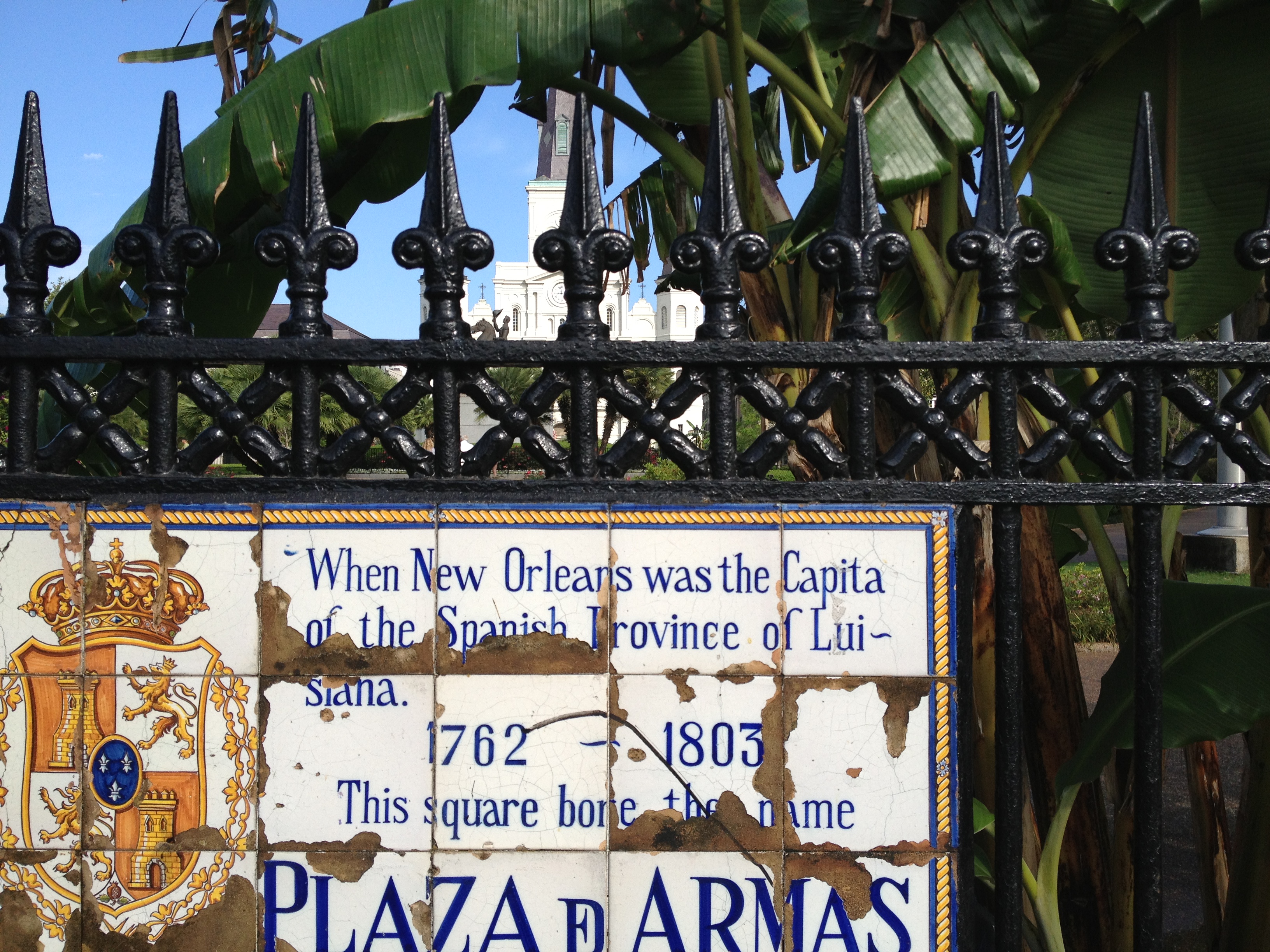
Let the Good Times Roll

Checking in from a rain-soaked Reagan National airport, where I think I see the plane I’ll take down to New Orleans taxiing towards its gate.  Yes, it’s “Growth Week” at Bank Director, and I’m heading to the Crescent City to host bank CEOs, Chairmen and board members keen to focus on big picture business issues surrounding growth (not necessarily associated with mergers and acquisitions) and profitability.

New Orleans

A Deep Dive

I realize the phrase “let the good times roll” is most frequently heard during Mardi Gras celebrations in New Orleans; I’m using it to tee up Bank Director’s Growth Conference that kicks off tomorrow morning at the Ritz-Carlton.  Once the lights come up, I’ll be interested to hear:

  • How growth is driving pricing;
  • Why efficiency & productivity are both key elements in positioning a bank to grow; and
  • If “overcapacity” in the US banking industry offers opportunities.

I’m particularly excited for our opening session with Thomas Brown, CEO, Second Curve Capital.  We’ve asked him to help us “set the table” for the next two days of conversations with an outlook for banks across the country by reviewing the current capital market and operating conditions, thereby providing financial context to the next two days’ presentations.  If I don’t cover his remarks in my post tomorrow, you can bet our editor, Jack Milligan, will on his must-read blog The Bank Spot.

A Look Back

Much of last year’s conversation revolved around technology and the need to adapt to a changing marketplace, as well as the importance of creating a unique niche in a competitive landscape dominated by the biggest banks.  Many of our bank speakers at the conference had a more nuanced view of technological change. Richard Hill, the chief retail banking officer for the $19-billion asset Hancock Holding Co. in Baton Rouge, Louisiana, said when he got into banking in the 1970s, the prediction was that checks would go away and branch banking would go away. That clearly didn’t happen, or at least not at the accelerated pace that many predicted. The problem for his bank and for many others is that profits are getting squeezed with low interest rates, and the bank needs to make investments that expand revenue. As he said, “a great challenge we have is figuring all this out.”

Take Our Your Crystal Balls

Let me wrap up by sharing a 2 minute video our team compiled on the “future” of banking.  We played it at our Acquire or Be Acquired conference in January and the perspectives of KPMG’s national banking leader, the CEO of Congressional Bank, etc. are worth a watch and listen.

Laissez les bons temps rouler!

The Single Greatest Constraint on Growth

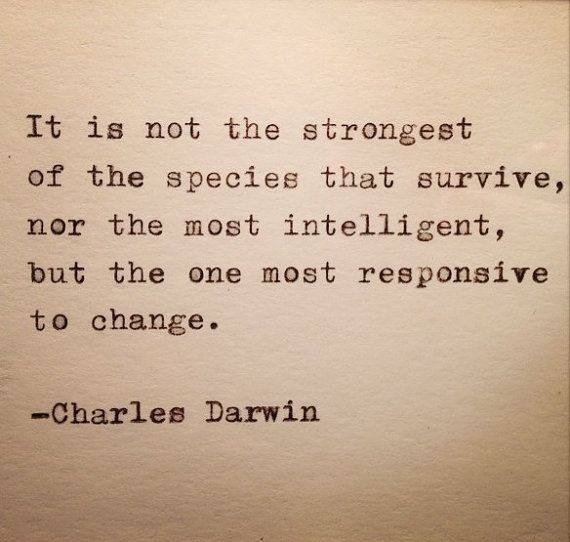
With the revenue pressures facing the banking industry being some of the most intense in decades, banks need to think more constructively about their businesses. At the same time, changing consumer behavior could drive the industry to reallocate its resources to less traditional growth channels in order to stay ahead.  In my view, the words of an English naturalist reflect the single greatest constraint on growth today.

photo-6

Powerful Forces

One of our long-term corporate sponsors, PwC, recently shared their thoughts on the future of the retail banking industry.  In their view, “powerful forces are reshaping the banking industry, creating an imperative for change. Banks need to choose what posture they want to adopt – to lead the change, to follow fast, or to manage for the present. Whatever their chosen strategy, leading banks will need to balance execution against… critical priorities and have a clear sense of the posture they wish to adopt.”  If you, like our friends from PwC, are joining us in New Orleans later this week to dive into this very topic, their compelling “Retail Banking 2020” report might make for good airplane company.

Looking Back in Order to Look Ahead

Last year, John Eggemeyer, a Founder and Managing Principal of Castle Creek Capital LLC, helped me to kick off our inaugural Growth Conference.  As a lead investor in the banking industry since 1990, he shared his views on our “mature industry,” That is, banking follows a historic pattern of other mature industries: excess capacity creates fierce competition for business which in turn makes price, not customer service, the key differentiator.  While offering myriad thoughts on what makes for a great bank,  John did share some hard-to-swallow statistics and opinions for a crowd of nearly 200 bankers and industry executives:

  • Publicly traded banks from $1 billion to $5 billion in assets saw their stock values rise at about half the rate of the broader market as a whole since early 2009.
  • Of the 300 or so publicly traded banks in that size range, only about 60 of them traded at their pre-recession price multiples.
  • In the last 40 years, bank stocks always followed the same pattern in a recession: falling in value quicker than the rest of the market and recovering quicker.

I share these three points to provide context for certain presentations later this week.  Some build on his perspectives while others update market trends and behavior.  Still, an interesting reminder of where we were at this time last year.

Getting Social-er

Yesterday, I shared the hashtag for The Growth Conference (#BDGrow14).  Thanks to our Director of Research — @ehmccormick — and Director of Marketing — @Michelle_M_King — I can tell you that nearly 30% of the attending banks have an active twitter account; 78% of sponsors do.  On the banking side, these include the oldest and largest institution headquartered in Louisiana — @IBERIABANK, a Connecticut bank first chartered in 1825 with over $3.5 billion in assets — @LibertyBank_CT and a Durham, NC-based bank that just went public last month — @Square1Bank.  On the corporate side of things, one of the top marketing and communications firms for financial companies —@wmagency, a tech company that shares Bank Director’s love of orange — @Fiserv and a leading provider of personal financial management — @MoneyDesktop join us.  Just six of many institutions and service providers I’m looking forward to saying hello to.

##

More to come — from New Orleans, not D.C. — tomorrow afternoon.

Its Growth Week

Its finally here… “Growth Week” at Bank Director.  Yes Discovery Channel, you can keep your shark week.  What we’re about to get into is far more interesting (at least, to some): what’s working in banking today.  Most of our team heads down to the Ritz-Carlton in New Orleans tomorrow and Wednesday for our 2014 Growth Conference.  Before they do, the first of five posts dedicated to building a business.

Growth-Key-Card-1

Think Distinct

Innovation means doing things differently.  Not just offering new products or offerings — but doing things differently across the entire business model.  Going into this event, I know many believe there are simply too many banks offering similar products and services.  I tend to think institutions are challenged when it comes to being distinctive compared with the competitor across the street.  This is not a new issue; however, there are more and more strategies emerging and enablers coming to market that can drive brand value, customer satisfaction and profitable growth.  Case-in-point: the work of our friends at StrategyCorps, whose idea is “be bold… go beyond basic mobile banking.”  One of the sponsors of the conference, I am excited to hear how  financial institutions, like First Financial, benefit from their mobile & online consumer checking solutions in order to enhance customer engagement and increase fee income.

Looking Back in Order to Look Ahead

While easy to frame the dynamics of our industry in terms of asset size, competing for business today is more of a “smart vs. not-so-smart” story than a “big vs. small.” During one of my favorite sessions last year — David AND Goliath — Peter Benoist, the president and CEO of St. Louis-based Enterprise Financial Services Corp, reminded his peers that as more banks put their liquidity to work, fierce competition puts pressures on rates and elevates risk.  As I went back to my notes in advance of this week’s event, my biggest takeaway from his presentation was we all talk about scale and net interest margins… but it’s clear that you need growth today regardless of who you are.  It is growth for the sake of existence.

Getting Social

To keep track of the conversation pre-, on-site and post-event on Twitter, use #BDGrow14 and/or @bankdirector + @aldominick.  In addition, I plan to post every day this week to About That Ratio, with tomorrow’s piece touching on the diminished importance of branch networks to underscore the importance of investments in technology.

The Elephant in the Room

In my opinion, the “elephant in the room” is the fact that 90% of institutions in the U.S. have less than $1Bn of assets… and that many advisers and pundits consider $2Bn to be the “magic number” a bank needs to be at or above in order to be considered viable and competitive.

photo

Against this backdrop, let me tee up today’s Bank Chairman/CEO Peer Exchange.  Only rarely do we limit the size of an “in-person” event; for this annual gathering, we find that small groups tend to optimize the interaction among the CEOs and Chairmen.  Essentially, the two positions that bear primary responsibility for delivering strong bottom line performance.

In a few hours, I will welcome 39 institutions to the Four Seasons — with 24 being publicly traded. The median asset size is $812M – with the biggest bank here checking in at $15.6Bn in size.  By design, we built this exclusive one and a half day event around a small number of presentations and peer exchange sessions where participants share their thoughts in a private, off-the-record setting.  For example:

  • Growth and profitability – how the top banks do it
  • Building a strong franchise
  • Perspectives on cyber security and digital issues
  • Managing risk to ensure growth
  • Compensation techniques to retain and attract new leaders and key staff

This format allows for in-depth discussions of critical, and sometimes sensitive, issues for just a bank’s CEO, Chairman and/or Lead Director to consider with their contemporaries. To kick things off this morning, we will take a look at various growth stories and strategies… and I’ll be sharing some key takeaways around that topic in the late afternoon/early evening. For more “timely” insight on trends or overarching topics, feel free to follow along on twitter where my username is @aldominick and the hashtag I’ll use is #chair14.

FI Tip Sheet: Positive Trends

A few weeks ago, to begin “The Innovator’s Dilemma,” I shared the need for banks to think differently or risk becoming obsolete.  This morning’s column builds on that idea by looking at some of the characteristics of top performing publicly held banks based on a research piece shared by Raymond James.  I studied this list and realized quite a few of the “winners” leverage design trends, the second point in today’s post, to differentiate their messaging.  My third and final point looks at technology expertise making its way into a bank’s boardroom — and provides an excuse to post a number of pictures from my time in Nashville last week. 

Top of the (Performance) Pack
Recently, Raymond James presented its second annual Community Bankers Cup.  This “award” recognizes the top 10% of community banks based on various profitability, operational efficiency and balance sheet metrics culled from a pool of 302 publicly traded community banks with assets between $500 million and $10 billion.  What we see in the firm’s recap is superior financial accomplishment drives superior stock price returns.  These 30 banks (e.g. Eagle Bancorp, First Financial, etc.) demonstrated exceptional results “on a relative basis in one or more of the following measurements of financial performance and stability: non-performing assets to loans and real estate owned, five-year average core deposit percentage, net interest margin, efficiency ratio, return on average assets, and return on average tangible common equity.”  If you are looking for examples of strong + healthy banks that have taken creative ideas to build a business, and subsequently monetized them, take a look at what the Raymond James team writes about these 30 institutions.

Ahead of the Curve
Since the beginning of the most recent global financial crisis in 2008, Getty Images has been tracking the changes in imagery used by financial services providers to represent their brand.  In their words, “gone are the depictions of aspiration and conspicuous wealth as financial services brands try to re-establish trust with their customers.”  In their place comes creative uses of community support “set-up for the long-term to  demonstrate their responsibility for local businesses, communities and the environment.”  Take a look at this “visual trends in financial services marketing” to get a truer sense of what’s working for bank marketers today.


Surprisingly Staffed
Last week, our team welcomed 117 bank officers and directors to the Hermitage in Nashville.  At this spectacularly Southern hotel, we went a bit old school and put pen + paper in front of these decision makers to ask five technology-specific questions.  I don’t normally equate technical proficiency with a bank’s officers and directors; however, the vast majority of attendees shared that their executive team has at least two people with strong technology understanding/experience.  While a small sample size, more then 50% of these key leaders responded to our query… and the results underscore, in my opinion, the importance being placed on  technology at community banks.  In addition, I did hear from several Chairmen that they are adding outside directors with an understanding of issues like cyber security risk and how to oversee vendor management.  If you’re interested to see what an event looks like from my POV, here’s a look (photos courtesy of Don Wright Designs & Photography)

Aloha Friday!

FI Tip Sheet: Strong Board, Strong Bank

As the banking industry continues to regain its health, efficiency and productivity are key elements in positioning a bank to grow.  Still, the reality remains there is an overcapacity in the US banking industry and the consolidation trend that brought the number of bank charters from over 14,000 to under 7,000 over the last 25 years will continue.  So let me sum in up in word letters: OTSS… only the strong survive.  Today’s post builds on this idea and offers a few takeaways from day one of the Bank Board Training Forum.

photo-2

Don’t Cry For Me

Yes, a more demanding regulatory and business environment has placed a substantial burden on bank directors and their boards. However, nearly every conversation/presentation focused on what’s possible — and not what’s broken.  Here are a few characteristics of successful “growth” banks:

  • They have a history of executing accretive transactions that are supported in the market both post-announcement and in terms of performance over time.
  • They tend to under promise and over deliver

While mergers and acquisitions is the principal growth strategy for many of these institutions, don’t sleep on building organically.  Indeed, many of the banks in attendance look at M&A as a complement to their growth plans.

An appetite for technology
We welcomed 117 bank officers and directors to the Hermitage in Nashville yesterday (and I’ll be getting up on stage in a few minutes to do so again this morning).  We went old school and put pen + paper in front of these men and women and asked a few true/false technology-specific questions.  47% have responded so far and here’s what I’m finding:

  • T/F: Our executive team has two people with strong technology understanding/experience…  43 responded true and only 12, false.
  • T/F: I would describe my bank as innovative… 40 responded true and 15 false
  • T/F: Mobile banking is an important part of our strategy… 46 responded true and 8, false

Growing Through Innovation
I heard one bank is consolidating some 200 different software packages, while another introduced concierge banking.  Interestingly, 11 bankers wrote on the survey above that the most innovative “thing” they are doing right now involves mobile banking.

##

I’ll try to post more later today, as several of the afternoon conversations tied growth into risk and audit concerns, two topics I’ve covered earlier this week.  Aloha Friday!

FI Tip Sheet: This Week in Pictures

As I wrap up the week, let me take a look back at Bank Director’s 20th annual Acquire or Be Acquired conference vis-a-vis video recaps and a gallery of pictures from the Arizona Biltmore.

_2441032004

Sunday Recap

If you’re curious for a <90 second summary of our first day in the desert, take a read at what I wrote or look at these two videos. The first, of our talented editor Jack Milligan; the second, my two cents.

.

.

Monday Recap

The second full day of the program built on Sunday’s discussions relative to growth, profitability, efficiency and the need for scale.  Jack and I both shared our thoughts in these video pieces and I also authored a piece that can be found here.

.

.

Photo Gallery

Credit for these great pictures goes to Keith Alstrin of Alstrin Photography.

Aloha Friday!

Wrapping up Acquire or Be Acquired

As we bid adieu to this year’s crowd, it strikes me that efficiency and productivity are key elements in positioning a bank to grow.  While this year’s Acquire or Be Acquired conference (#AOBA14) touched on numerous growth strategies, the common denominator among “organic growth banks” is a robust and diverse lending platform along with a proven credit culture and process.

photo (42)

The future of banking

For those joining us at the Arizona Biltmore on Sunday morning, you saw a video that summarized various thoughts on “the future of banking.”  A number of attendees asked to see the video we used to open the conference again.  Here it is:

Tuesday Takeaways

My “rapid reaction” to this morning’s conversations at the Arizona Biltmore, in no particular order: growth is now driving pricing; efficiency & productivity are both key elements in positioning a bank to grow; and the base reality remains that there is overcapacity in the US banking industry.

Off to the hit ’em long and straight (I hope) as we wrap up our 20th annual conference with our annual golf tournament.  74 and sunny… what a treat!

Acquire or Be Acquired – Sunday Recap

The most successful banks have a clear understanding and focus of their market, strengths and opportunities.  One big takeaway from the first full day of Bank Director’s Acquire or Be Acquired Conference (#AOBA14 via @bankdirector): it is time for a bank’s CEO and board to reassess their strategic opportunities.

_4323183253
thanks to Keith Alstrin of Alstrin Photography

90 Second video recap

Looking for profitability cures

From the strategies and mechanics behind transactions to the many lingering questions regarding industry consolidation, economies of scale, regulatory burdens and how to build long-term value, today featured some pretty fascinating presentations.  One of the common themes from the afternoon sessions: most bankers are looking to cure profitability challenges through some kind of M&A activity.

How much are you worth
Whether buying, selling or simply growing organically until it’s time for a transaction, a bank’s leadership team needs metrics in place to know and grow its valuation.  As we heard today, valuation is a controversial and complex subject.  To wit: it requires an in-depth understanding of a company, its market and competitors, financial and non-financial information.  In addition, factors such as the legal and regulatory environment proves quite a challenge.

Trending topics
Overall, the issues I took note of where, in no particular order: margin compression, deposit funding, efficiency improvements and business model expansion in the context of the current environment. Also, keep an eye on the the Northeast and greater Atlanta area this year for increased merger and acquisition activity.

More to come from the Arizona Biltmore tomorrow…

FI Tip Sheet: Acquire or Be Acquired

So we had a little snow in D.C. this week… and a bit of wind too. Fortunately, I’m heading west towards Bank Director’s 20th annual Acquire or Be Acquired conference this morning. As I wrote about on Wednesday, I will be checking in on a daily basis from the historic Arizona Biltmore with insight and observations from our flagship “AOBA” conference. Before I hit the desert, let me share three thoughts that tie into the conference themes of bank mergers and acquisitions as I make my way from D.C. towards Phoenix.

img_1174

7,000 is so 2013

Let’s simply start with a number: 6,891. Confused? Don’t be. This is the number of federally-insured institutions nationwide as of last Fall — falling below 7,000 for the first time since federal regulators began keeping track in 1934 (according to the FDIC). Now, let me put this into context; specifically, by asset size. 6,158 banks (90% of all U.S. banks) have assets of less than $1 billion. 562 banks have assets between $1 billion and $10 billion and only 108 institutions have assets greater than $10 billion. The kicker? The “distribution of wealth” heavily favors the biggest of the big. Case-in-point: banks with $10 billion or more in assets controlled 24% of total industry assets in 1984 (according to the American Banker). That share has swelled to over 80% today. When you think about things in these terms, its not surprising to hear the majority of bank M&A will occur in the <$1Bn range.

What’s the deal?

According to SNL Financial, there were 227 M&A transactions in 2013 — up from 218 in 2012. Nonetheless, these numbers pale in comparison to “the halcyon days of late 1990s.” As our editor, Jack Milligan, wrote in a post that ran on this site in December, we may “eventually see the emergence of a new tier of banks in the $10 billion to $50 billion range that will consolidate attractive banking markets… and help drive consolidation into yet another phase.” Still, hurdles to doing a deal remain. For instance:

  1. Higher capital and liquidity requirements;
  2. Today’s regulatory environment presents many significant and ongoing challenges; and
  3. Access to capital markets remains limited to many.

That said, I’m sure we will continue to see the combination of really strong companies — think this week’s union between North Jersey banks ConnectOne and Center Bancorp – and do agree with Jack’s perspective on what the future holds.

Ready to raise your hand?

I’m confident that an advisor (or two, or three or ten) will declare a merger or acquisition to be the principal growth strategy for community banks. I’m also anticipating conversations that entail the need for a bank’s CEO and board to re-examine their branch networks and strategies. Steering clear of anything that relates to the actual structure of deal, here are three questions I think will crop up early (and often) at AOBA:

  1. How do you know your bank has the right team in place to implement, and deliver, sustained results?
  2. If I’m not ready to sell — but am not in a position to buy — how can I grow?
  3. How can I, as a potential acquirer, create a strategic advantage vs. my peers?

If you’re joining us in Arizona this weekend, I’m looking forward to saying hello. If you’re not able to make it but want to follow the conversations from afar, #AOBA14 and @aldominick on Twitter should do the trick.

Aloha Friday!

Banking’s Biggest M+A Conference (#AOBA14)

In a few days, I’ll be taking to the stage with our editor, Jack Milligan, to welcome some 830 attendees, guests and staff to Arizona and Bank Director’s annual Acquire or Be Acquired conference.  Widely regarded as the financial industry’s premier M&A event, our 20th annual “AOBA” will bring bank CEOs, CFOs, Chairmen and outside directors to the Arizona Biltmore for three days of presentations, workshops, networking… and hopefully, some sun.  These industry leaders join us to explore issues such as strategic alliances, investors’ interests and whether now is the right time to be a buyer — or a seller.  I thought I’d tee up my blogging plans before leaving the snow and ice of Washington D.C. (see below) for the warmth of the Southwest.

photo (36)

Acquire or Be Acquired

On the merger front, one of the big themes over the past few years has been unrealistic expectations between buyers and sellers of banks.  Not surprisingly, sellers think pricing is too low and buyers think sellers’ expectations are too high.  Now, when managed effectively, mergers and acquisitions present necessary and lucrative opportunities — and this particular conference affords bankers and board members the chance to “go deep” into the M&A process in order to represent and protect the interests of their particular bank.  I’ll be spilling a lot of digital ink on a number of financial, legal, accounting and social issues facing bank executives and board members.  Today’s post simply tees up some of the social tools I’m going to use to keep folks current with the discussions.

Twitter
First and foremost, @bankdirector has a loyal following and does a great job putting info’ out for a bank’s officers and directors.  For this event, we’ve set #AOBA14 as the conference hashtag.  I’ll be tweeting under @aldominick.  Some of my colleagues will be as well; notably, our editor, Jack Milligan via @BankDirectorEd, Managing Editor, Naomi Snyder, with @NaomiSnyder and our Publisher, Kelsey Weaver, with @BankDirectorPub.

LinkedIn

Take a look at Bank Director’s LinkedIn page — and feel free to search under “groups” for Bank Director if you want to join in the discussions.

Instagram + Pinterest

I’ll be sharing behind-the-scenes pix from the Biltmore using the hashtag #AOBA14 on Instagram and will pin to “January’s Acquire or Be Acquired from the Arizona Biltmore” with Pinterest.

More to come as prep continues for January’s official welcome.