Looking for Inspiration? Look to USAA

Quickly:

  • Next week, my team hosts 350+ leaders from across the United States at Bank Director’s annual Bank Audit & Risk Committees Conference at the JW Marriott Chicago.
  • In advance of welcoming people to this popular event, it strikes me that the business of banking remains difficult despite improving economic conditions; indeed, the drive to digitize a bank’s operations continues to pose significant challenges to most.
  • Digital is, in my estimation, a CEO topic that requires a healthy dose of creativity and ambition.  As such, I’m sharing the following article on innovation — authored by John Maxwell and featured in Bank Director magazine’s current “Great Ideas” digital issue.  It focuses on how USAA taps the creative side of its employees to pre-position itself for the next new products, tools and technologies to benefit its diverse customer base.

USAA - ASD

“USAA was the first major financial institution to allow customers to deposit physical checks by taking a picture of them on their smartphones, rolling out the service in August 2009. It wasn’t until months later that Bank of America Corp., the nation’s second biggest bank by assets, said it would test the same functionality, by which point upward of 40,000 USAA members had already used the software to deposit more than 100,000 checks. And it wasn’t until the following year that JPMorgan Chase & Co., the nation’s biggest bank by assets, followed suit.

This was neither the first nor the last time that USAA, a niche player in the financial services industry serving current and former members of the military and their families, had beaten larger rivals to the punch in introducing a big, transformative idea. In 2015, the $78 billion asset company became the first major U.S. financial institution to roll out facial and voice recognition technology that allows members to log in to its mobile app without entering a password.

What is it about USAA that explains how it’s regularly at the forefront of big ideas? Is it serendipity, or is there something more at play? And if it’s the latter, are there aspects of USAA’s approach that can be replicated by other banks that want to accelerate their own internal innovation engines?

One explanation for USAA’s success is that the company has always had to think creatively about distribution because of its dispersed member base. With members stationed at military installations around the world, some in active combat zones, simply building more branches has never been a viable distribution strategy. It has a single bank branch at its headquarters in San Antonio, and it wasn’t until 2009 that it began opening a small collection of financial centers near domestic military bases—there are 17 of these centers currently. This is why USAA so readily embraced mobile banking, which enables its members to access their accounts irrespective of location.

Yet, chalking up USAA’s accomplishments in the sphere of innovation to the idea that “necessity is the mother of all invention” doesn’t do the story justice. More than any other major company in the financial services space, USAA has made it a priority to harness each of its 30,000 employees in order to stay on the cutting edge. It began doing so in earnest in 2010 by launching a so-called ideas platform on the company’s intranet. Anyone from the CEO to frontline personnel to security guards can post and vote on ideas that have been entered on the platform. Between 10,000 and 11,000 ideas were submitted in each of the last two years. Ideas that get at least 1,000 favorable employee votes are escalated to USAA’s in-house innovation team overseen by Zack Gipson, USAA’s chief innovation officer.  Last year, 1,206 employee ideas were implemented, while 189 of them have come to fruition thus far in 2017.

USAA also hosts events and challenges for employees that are designed to elicit ideas for new or improved products and services. There are 28 such activities planned this year, taking the form of multi-week coding and design challenges as well as single-day hackathons where teams are tasked with solving a specific problem, says Lea Sims, assistant vice president of employee and member innovation. At an event in 2015, USAA happened upon the idea for voice-guided remote deposit capture, which uses voice commands to guide visually impaired members through the process of depositing checks on a mobile device. The service went live in July of 2016.

On top of these specific initiatives, USAA uses incentives and a consistent messaging campaign to encourage employees to brainstorm and share innovative ideas. Rewards are handed out to winners of challenges, as well as to any employee behind an idea that gets 1,000 votes on the ideas platform—an additional reward is meted out if the idea is implemented, explains Sims. These rewards come in the form of company scrip, which can be redeemed for actual products. A total of 94 percent of USAA employees have participated one way or another in its various innovation channels, with three quarters of a million votes submitted on its internal ideas platform in 2016 alone. “We put a premium on innovation,” says Sims. “It starts in new employee orientation as soon as you walk in the door to be part of our culture.”

USAA has taken steps to crowdsource ideas from its 12 million members, or customers, as well. In February it introduced USAA Labs, where members can sign up to share innovative ideas and participate in pilot programs of experimental products. “The goal of our membership channel is, quite frankly, to replicate the success of our employee channel,” says Sims. Thus far, over 770 members have signed onto the program, which is still in its early stages but could become a major part of USAA’s innovation channel in the future.

Last but not least, sitting atop USAA’s employee and member-based innovation channels is a team of 150 employees who focus solely on bringing new ideas to life. This is its strategic innovation group, which executes on crowdsourced ideas but spends most of its time brainstorming and implementing large, disruptive concepts such as remote deposit capture and biometric logins. It’s this final component of USAA’s strategy that adheres most closely to the institutional structure articulated by Harvard professor Clayton Christensen, a leading expert on the process of innovation. In his seminal book, The Innovator’s Dilemma, Christensen makes the case that established firms should vest the responsibility to bring ideas to life in organizationally independent groups. This is especially important when it comes to disruptive ideas that threaten to cannibalize other products and services sold by the firm, not unlike the way that remote deposit capture reduces the need for physical branches.

In short, the reason USAA has consistently been at the forefront of innovation in the financial services industry has next to nothing to do with serendipity. It traces instead to the company’s strategy of engaging all of its stakeholders in the idea generation process, harnessing the creative power of 30,000 employees, 12 million members and a select team of internal innovators who focus on nothing but bringing new ideas to life. It’s this structural approach to innovation, and the focus on employee engagement in particular, that offers a valuable model for other banks to follow. Indeed, out of the many big ideas USAA has introduced over the years, its strategy of crowdsourcing innovation may very well be the biggest.”

*John J. Maxfield is a writer and frequent contributor to Bank Director.  To read more of this month’s issue (for free), click here.  In full disclosure, I’m a loyal USAA member — as is my entire family — tracing back to my father’s days at the Naval Academy.  I can attest to the “awesomeness” of the bank’s various mobile offerings — like facial recognition, remote check deposit, the integration of Coinbase (that lets me see the balance of my bitcoin and ethereum balances alongside my checking and savings accounts), etc.

Three Strategic Issues Shaping Financial Services

By Al Dominick, CEO of DirectorCorps (parent co. to Bank Director & FinXTech) | @aldominick

Quickly:

  • Banks need to think beyond the notion that they can either build a technology solution or buy it — for inspiration, take a look at how Silicon Valley Bank uses APIs to tap into technology from third party providers.
  • Thanks to products like Amazon’s Alexa, financial institutions must now prepare for “hands-free banking.”
  • Various startups are using behavioral economics to nudge people towards making better financial choices for saving & investing.

_ _ _

If you have been to any of our conferences, you’ve probably heard me (and others) encourage participants to get up & out from their offices to see what’s happening with their customers, potential partners and competition.  I do my best to practice what is preached — and have recent trips to San Francisco, New York City and Austin to prove it.  As I re-read hand written notes, dog-eared white papers and highlighted sections of annual reports, I realize just how much time I’ve spent talking about technology-driven trends shaping the financial industry.  To me, three of the bigger issues being discussed right now involve:

  1. The push for retail customers, which may already be spurring dealmaking.
  2. How customers experience and interact with their bank — which broadly ties into the question should an institution buy, partner or mimic a fintech; and
  3. Given all the hype surrounding machine learning and advanced decision modeling, leadership teams want to know how to augment a bank’s revenues & relationships with such technologies.

To these three trends, both our editor-in-chief, Jack Milligan, and I agree that most bankers understand the imperative to innovate around key aspects of their business, whether it’s payments, mobile in all its many permutations, lending, new account onboarding or data.

Personally, when it comes to knowing one’s customer (and potential customer), I find any good experience starts with great data.  As Carl Ryden, the CEO and Co-Founder at PrecisionLender, made clear at their recent Bank of Purpose conference, “if you hold your data close to the vest and you don’t do anything with it, it’s not an asset. It’s a liability.”

So with that in mind, let me close by sharing a link to our newest issue of Bank Director magazine.  This is our “Great Ideas” issue, one in which we highlight companies like USAA who crowdsource upwards of 10,000 ideas per year for products and new technology.  At a time when banks of all sizes are starting to take advantage of platform-based services, this new digital issue is one that I am really proud to share.


Address the Culture Gap Between Banks and FinTechs

By Al Dominick, CEO of DirectorCorps (parent co. to Bank Director & FinXTech) | @aldominick

Quickly

  • A “bank|fintech partnership” narrative dominated the conversation at last week’s FinTech Week NYC events.
  • If I were running a financial institution right now, I’d focus on the word integration instead of innovation.
  • Culture is one of the best things a bank has going for it. It’s also one of the worst.

_ _ _

While I am bullish on the future of banking as a concept, I am admittedly concerned about what’s to come for many banks who struggle with cultural mindsets resistant to change. As I shared in an op-ed that kicked off last week’s FinTech Week NYC, the same dynamics that helped weather the last few years’ regulatory challenges and anemic economic growth may now prevent adoption of strategically important, but operationally risky, relationships with financial technology companies.

Most banks don’t have business models designed to adapt and respond to rapid change. So how should they think about innovation? I raised that question (and many others) at last Wednesday’s annual FinXTech Summit that we hosted at Nasdaq’s MarketSite. Those in attendance included banks both large and small, as well as numerous financial technology companies — all united around an interest in how technology continues to change the nature of banking.

More so than any regulatory cost or compliance burden, I sense that the organizational design and cultural expectations at many banks present a major obstacle to future growth through technology. While I am buoyed by the idea that smaller, nimble banks can compete with the largest institutions, that concept of agility is inherently foreign to most legacy players.

It doesn’t have to be.

Indeed, Richard Davis, the chairman and CEO of the fifth largest bank in the country, U.S. Bancorp, shared at our Acquire or Be Acquired Conference in Phoenix last January that banks can and should partner with fintech companies on opportunities outside of traditional banking while working together to create better products, better customer service and better recognition of customer needs.

The urgency to adapt and evolve should be evident by now. The very nature of financial services has undergone a major change in recent years, driven in part by digital transformation taking place outside banking. Most banks—big and small—boast legacy investments. They have people doing things on multi-year plans, where the DNA of the bank and culture does not empower change in truly meaningful ways. For some, it may prove far better to avoid major change and build a career on the status quo then to explore the what-if scenarios.

Here, I suggest paying attention to stories like those shared by our Editor-in-Chief Jack Milligan, who just wrote about PNC Financial Services Group in our current issue of Bank Director magazine. As his profile of Bill Demchak reveals, it is possible to be a conservative banker who wants to revolutionize how a company does business. But morphing from a low-risk bank during a time of profound change requires more than just executive courage. It takes enormous smarts to figure out how to move a large, complex organization that has always done everything one way, to one that evolves quickly.

Of course, it’s not just technological innovation where culture can be a roadblock. Indeed, culture is a long-standing impediment to a successful bank M&A deal, as any experienced banker knows. So, just as in M&A deals, I’d suggest setting a tone at the top for digital transformation.  Here are three seemingly simple questions I suggest asking in an executive team meeting:

  • Do you know what problems you’re trying to solve?
  • What areas are most important to profit and near-term growth?
  • Which customer segments are critical for your bank?

From here, it might be easy to create a strategic direction to improve efficiency and bolster growth in the years ahead. But be prepared for false starts, fruitless detours and yes, stretches of inactivity. As Fifth Third Bank CEO Greg Carmichael recently shared in an issue of Bank Director magazine, “Not every problem needs to be solved with technology… But when technology is a solution, what technology do you select? Is it cost efficient? How do you get it in as quickly as possible? You have to maintain it going forward, and hold management accountable for the business outcomes that result if the technology is deployed correctly.”

Be aware that technology companies move at a different speed, and it’s imperative that you are nimble enough to change, and change again, as marketplace demands may be different in the future. Let your team know that you are comfortable taking on certain kinds of risk and will handle them correctly. Some aspects of your business may be harmed by new technology, and you will have to make difficult trade-offs. Just as in M&A, I see this is an opportunity to engage with regulators. Seek out your primary regulator and share what you’re looking for and help regulators craft an appropriate standard for dealing with fintech companies.

Culture should not be mistaken for a destination. If you know that change is here, digital is the expectation and you’re not where you want to be, don’t ignore the cultural roadblocks. Address them.

A Technology Takeover on BankDirector.com

For the next 5 days, I set up shop in my former home of New York City for FinTech Week NYC.  Hosted by Bank Director’s FinXTech in conjunction with Empire Startups, the week can best be understood as a confluence of conferences, round-table discussions, demo days, meetups and networking events across the city.

If you’re not familiar with the various events taking place, here is a quick snapshot of three we’re primarily involved with starting today and running through Friday, the 28th.

The common thread throughout each of these days? A desire to help leaders in the financial sector to better understand how when/where/why to engage with emerging technologies.

Given our cultural mindset to help make others successful, we’re kicking things up a notch with our on-line efforts.  Indeed, we’re “taking over” BankDirector.com and loading the site up with strategic issues and ideas that a bank’s CEO, board and executive team can immediately consider.  In parallel, we’re developing even more content to benefit technology companies keen to work with financial institutions and have some really interesting things planned for our FinXTech.com.  Three examples of this free content:

  • On BankDirector.com, Tips for Working With Fintech Companies by our editor, Naomi Snyder, provides insight from executives at Wells Fargo (one of the country’s biggest) and Radius Bank (a very strong community bank) on how they handle fintech partnerships.
  • On FinXTech.com, Advice for Fintech Companies Working with Banks by our editor-in-chief, Jack Milligan, shares suggestions from SF-based Plaid Technologies and Chicago-based Akouba as to how banks and tech companies can set realistic expectations in terms of cooperating to their mutual benefits.
  • Finally, I authored a piece on a major challenge I see confronting banks when it comes to their digital futures with A Roadblock That Ruins Futures.  As an optimist, things aren’t hopeless; you will see I find inspiration from the CEOs of U.S. Bancorp, PNC and Fifth Third.

Banks Vs. Fintechs

By Al Dominick, CEO of DirectorCorps (parent co. to Bank Director & FinXTech) | @aldominick

Quickly:

  • I’m in from Dallas at the Consumer Bankers’ Association “CBA Live!”
  • Thanks to Richard Hunt, the CEO of the CBA, for inviting me to participate.  Richard spoke at our Acquire or Be Acquired conference in January + I hope to live up to his great speaking standards when I’m given a mic tomorrow.
  • The rapid pace of change in the financial sector took center stage during yesterday’s opening session.

_ _ _

Since arriving in Big D on Sunday evening, I’ve met quite a few interesting men & women from great financial institutions at this annual event for the retail banking industry.  This year, more than 1,300 are at the Gaylord Texan (with some 550 being senior-level bankers) to talk shop.  Personally, I’m looking forward to presenting on “Economic States of America” with Amy Crews Cutts (Chief Economist, Equifax), Robert Dye (Chief Economist) of Comerica Bank and Cathy Nash, the CEO of Woodforest National Bank tomorrow morning.  From credit trends to banking consolidation, if you’re in Dallas, I invite you to join us for this Super Session as we explore the economic state of our union.

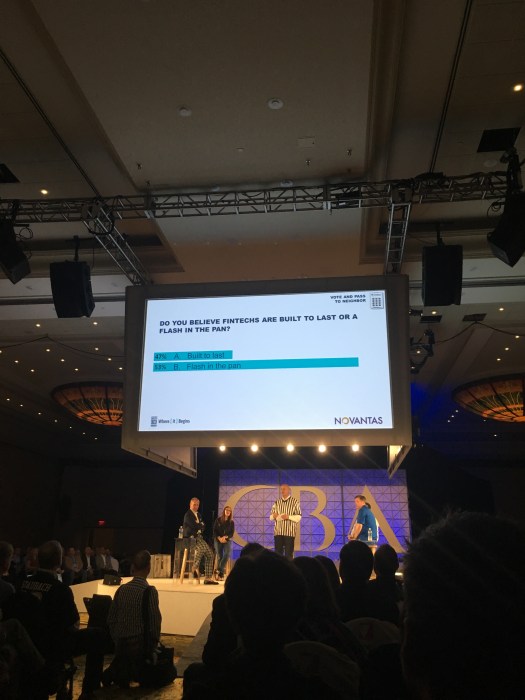
Before then, I thought to share a few interesting takeaways from a “FinTech vs. Bank” general session that pit SoFi and Kabbage “against” PNC and BBVA.  As part of the panel discussion, CBA posed a number of interesting questions to the audience; most notably, “do you believe fintechs are built to last.”  Given our upcoming FinXTech Summit in NYC, I thought the answer (which reflects the thoughts of many of the biggest banks in the U.S.) was interesting, but not surprising.

IMG_8588

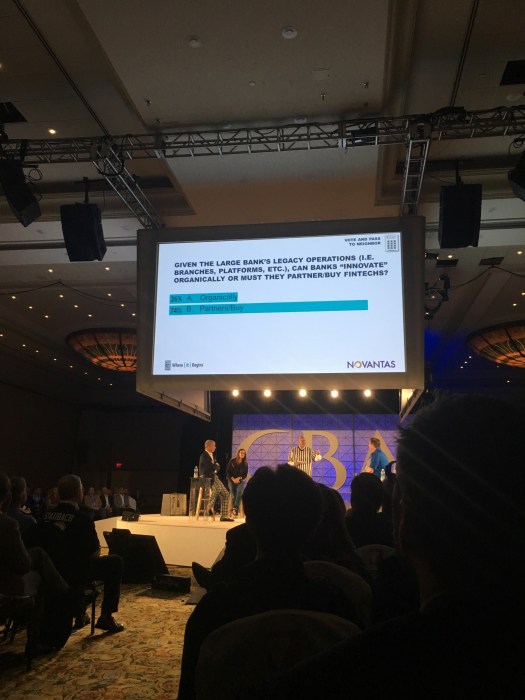
Further, I found the results of this question pretty telling (given we asked a similar question at this year’s Acquire or Be Acquired conference and received a similar response from an audience of CEOs, CFOs, and members of a bank’s board).

IMG_8586

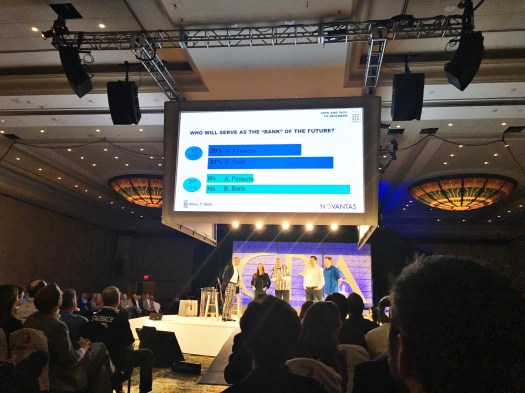
Finally, I think the results of this question best represent the types of conversations I’ve found myself in when I explain what I do + who I meet with.

FullSizeRender 106

As I’ve shared in recent posts, an increasing number of financial institutions are using partnerships with technology companies to improve operations and better meet customer needs.  Given the input on these questions from various heads of retail, product lines and product development + compliance, risk and internal audit, I feel these three pictures are worth noting — and sharing.  Agree or disagree?  Feel free to leave a comment…


“Statement”: I Am All In On IoT

By Al Dominick | @aldominick

Quickly:

  • Thanks to companies like Amazon, we are closing the gap between the physical & digital world.
  • Given our industry’s relentless pace of change, I think banks should place a big bet on figuring out how to “get involved” with the Internet of Things (IoT).
  • I am personally intrigued by the potential of car-based payments.

Getting smarter about the Internet of Things has been a focus of mine since talking with US Bancorp’s CEO, Richard Davis, in January.  He shared various areas of technological interest for the 5th-largest bank in the U.S. (e.g. biometrics & security to machine learning… distributed ledgers to digital identify). However, his take on our interconnected world and the promise of IoT really captured my attention and imagination.  Since then, I have taken much deeper dives into the world of Amazon’s Web Services, IBM’s Watson and Salesforce’s IoT Cloud.  I’ll not break any new ground for those well versed in the underlying technologies or principles with this post, but I would suggest that those in the banking world think about how connected devices might catapult their businesses forward.

IMG_8194

Take, for example, the potential of a Tesla.  Last week, I had a chance to see one of their high-end model S cars here in DC.  Spectacularly designed, I couldn’t shake the idea that the way we bank might radically change given innovations taking place at companies such as this one.  (*To be fair, I had recently read a McKinsey report that suggests a linking of the physical and digital worlds could generate up to $11.1 trillion a year in economic value by 2025).

Still, if I were running a bank today, I would immediately make a commitment to figuring out what we can do to intersect with the waves of new opportunity being created by companies like this.

I would dedicate both time and resources to figuring out how emerging technologies might enhance our institution’s insight into revenue opportunities, areas of unexpected risk and emerging customer expectations.  I’d welcome as many new ideas in now while I have the chance to consider what remains strategically possible.  Basically, I’d stick a sign on our front door with a simple word: Ambitious.

3 Examples of Next’Gen Partnerships

News & Notes from February 13 – 17
By Al Dominick, CEO of DirectorCorps (parent co. to Bank Director & FinXTech) | @aldominick

A few weeks ago, I made note of an interesting new relationship between a bank and a technology firm.  Specifically, BBVA Compass’s announcement that it has been piloting Amazon Lockers in eleven of its Austin-area branches.  This is the first time Amazon Lockers are available with a bank in the United States — and may provide a creative spark to those thinking about how to increase traffic into an existing branch network.

Since sharing my observation on this partnership, I’ve made note of a number of new relationships that reflect the changing nature of the financial industry.  This week, three things caught my eye:

In addition, I took note of Wells Fargo forming a new innovation team (called Payments, Virtual Solutions, and Innovations) to better build out its digital banking experiences.  The three pillars of this effort revolve around payments, artificial intelligence and APIs. For Wells Fargo — and banks in general:

  • Payments are a critical driver of relationships for consumer, small business, and commercial and corporate banking customers.
  • In terms of artificial intelligence, the bank sees an increasing number of opportunities to better leverage data to provide personalized customer service through its bankers and digital channels.
  • Application Programming Interfaces (APIs) technology enables commercial and corporate banking customers to integrate products, services and information into their own digital environments.

So as financial institutions continue to search for new growth opportunities, I intend to share weekly recaps like this as a way to share what I find compelling.  Let me know what you think — and if there are other news & notes I might share.

10 Banks and Fintechs Doing it Right

In advance of April’s FinXtech Summit
By Al Dominick, CEO of DirectorCorps (parent co. to Bank Director & FinXTech) | @aldominick

Quickly:

  • An increasing number of financial institutions are using partnerships with technology companies to improve operations and better meet customer needs.
  • For the past few months, banks and/or fintechs submitted case studies on specific technology solutions helping financial institutions produce real, quantifiable results to our team at FinXTech.
  • With more then 100 submissions in hand, a committee of FinXTech advisors worked with our team to compile a top-10 list during Bank Director’s Acquire or Be Acquired Conference in Arizona last week.

_ _ _

Throughout Bank Director’s annual Acquire or Be Acquired conference, I found myself in quite a few conversations about the continually changing nature of financial services. Many of these discussions revolved around the possibilities generated by traditional institutions partnering with emerging technology firms.  Some of these took place on-stage; for instance, I opened the second full day of the conference by polling an audience of 900+ on a variety of technology-related issues:

screen-shot-2017-02-08-at-5-06-44-pm

With results like these precipitating editorial coverage from our team and attendees alike, you’ll probably understand why I find the just-released ten finalists for our “Best of FinXTech Awards” so compelling.  Indeed, as the financial landscape continues to evolve, and executives grapple with a fast-changing operating environment that requires partnerships and collaboration, each of these relationships shows what is really possible when leaders explore something new together.

  • Bank of Nova Scotia (Scotiabank) + Sensibill: Scotiabank’s customers can store, organize and retrieve paper and electronic receipts through the Toronto, Canada bank’s mobile banking app and wallet, the result of a partnership with Sensibill, also based in Toronto. The service was launched in October 2016.
  • Franklin Synergy Bank + Built Technologies, Inc.: Built Technologies, in Nashville, Tennessee, improved the loan administration process for Franklin Synergy Bank, in Franklin, Tennessee. The $3 billion asset bank now manages a greater number of construction loans with fewer staff.
  • Green Dot (Go Bank) + Uber: Pasadena, California-based Green Dot Corp., which issues prepaid credit cards, partnered with Uber to provide the San Francisco transportation company’s drivers a fee-free debit card and an instant pay solution that allows drivers to be paid instantly.
  • IDFC Bank + TATA Consultancy Services (TCS): Due to a regulatory mandate, India’s IDFC Bank had just 18 months to expand into rural areas to better serve unbanked customers. The bank’s partnership with TCS, based in Mumbai, India, included the use of micro ATMs, which are modified point-of-sale terminals that expand the bank’s reach in rural areas.
  • National Bank of Kansas City + Roostify: San Francisco-based Roostify improved National Bank of Kansas City’s formerly inefficient and incomplete digital mortgage application process. Customers at the bank, based in Overland Park, Kansas with more than $600 million in assets, can now fill out a mortgage application in a little as 20 minutes, with no need for a phone call or trip to the branch to visit a loan officer.
  • Somerset Trust Company + BOLTS Technologies: BOLTS, based in Bethlehem, Pennsylvania, improved the account opening process at Somerset Trust Company, saving the $1 billion asset community bank in Somerset, Pennsylvania, roughly $200,000 in the first year by better automating the process and reducing error rates. Customers can start and complete the process on multiple channels.
  • Toronto-Dominion Bank (TD Bank) + Moven: TD Bank, based in Toronto, Canada, launched a real-time money management application in April 2016, developed by Moven in New York.
  • USAA + Nuance: USAA, based in San Antonio, Texas, made its website a little smarter in 2016 with the virtual assistant Nina, which provides support for USAA’s members. This use of artificial intelligence is the result of a collaboration with Nuance in Burlington, Massachusetts.
  • Woodforest National Bank + PrecisionLender: Partnering with Charlotte, North Carolina-based PrecisionLender to improve its loan pricing strategy helped $4.8 billion asset Woodforest National Bank, in The Woodlands, Texas, grow commercial loans by 16 percent and gain almost 20 basis points in net interest margin.
  • WSFS Bank + LendKey: WSFS Financial Corp., headquartered in Wilmington, Delaware, with $6.6 billion in assets, partnered with the lending platform LendKey, in New York, to expand the bank’s consumer loan portfolio with a student loan and refinancing product.

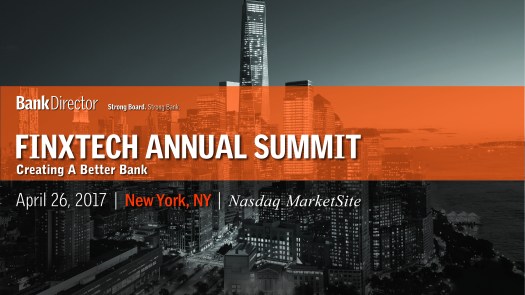
All ten of these partnerships demonstrate the strongest combination of collaboration and results.  For those interested, my colleague Kelsey Weaver (the President of our FinXTech platform) announces the three “winners” on April 26, 2017, during the FinXTech Annual Summit, at the Nasdaq MarketSite.

mc_030116_hires-4
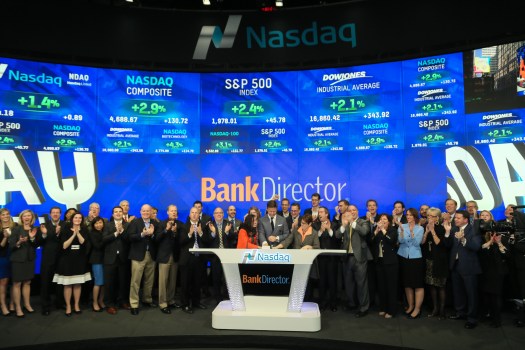
Closing bell ceremony at Nasdaq / Bank Director + FinXTech’s FinTech Day (March 1, 2016)

In advance of that announcement, I invite you to follow me on Twitter via @AlDominick, FinXTech’s President, Kelsey Weaver @KelseyWeaverFXT, @BankDirector and our @Fin_X_Tech platform and/or check out where and how this annual Summit — and these awards — fits into FinTech Week New York that we are hosting along with Empire Startups starting April 24.

We Are On To FinTech Week

#AOBA17 conference intel (Friday)
By Al Dominick, CEO of Bank Director | @aldominick

Quickly

  • The “bank of the future” is not about technology, it is all about customers.
  • For many financial institutions, the time may be right to retire legacy systems for cloud-based platforms.
  • Numerous financial technology companies are developing new strategies, practices and products that will dramatically influence the future of banking..

_ _ _

The intersection of technological innovation with strong depository franchises may lead to more efficient banking processes, reductions in fraud and a win/win/win for banks, financial technology firms (fintechs) and consumers.  Globally, nearly $23 billion of venture capital and growth equity has been deployed to fintechs over the past five years, and this number is growing quickly. Still, the nature and extent of impact that fintechs have on the industry remains unclear.

Throughout this week’s Acquire or Be Acquired conference, bank CEOs talked about the continually changing nature of financial services — with fintech often front and center.  For many, collaboration between traditional institutions and emerging technology firms bodes well for their future.  Here, Bank Director’s FinXTech provides authoritative, relevant and trusted content to a hugely influential audience, specifically:

  • Fintechs who view banks as potentially valuable channels or distribution partners;
  • Banks looking to grow and/or innovate with fintech companies’ help and support; and
  • Institutional investors, venture capitalists, state & federal regulators, government officials and academicians helping to shape the future of banking.

We designed FinXTech as a peer-to-peer resource that connects this hugely influential audience around shared areas of interest and innovation.  As a host of FinTech Week in New York City this April 24 – 28 (along with Empire Startups), we bring together senior executives from banks, technology companies and investment firms from across the U.S. to shine a light on what is really generating top line growth and bottom line profits through partnerships, collaboration and investments.

bank-slide-05

Given the changing nature of banking today, this week-long event in New York City looks at the various issues impacting banks, non-banks and technology companies alike.  So as we move towards FinTech Week in New York City, I invite you to follow me on Twitter via @AlDominick, FinXTech’s President, Kelsey Weaver @KelseyWeaverFXT@BankDirector and our @Fin_X_Tech platform and/or check out the FinTech Week New York website for more.

3 Things to Know from Day 1 at Acquire or Be Acquired

#AOBA17 conference intel (Sunday/Monday)
By Al Dominick, CEO of Bank Director | @aldominick

Quickly

  • New competitors and innovations are continually changing the business of financial services.
  • The continued shift towards technology, data, algorithms and smart analytics impacts how value and profit are created.
  • In the last 10 years, this is the best time for banks to access the capital markets.

_ _ _

The possibility of less regulation and a change in corporate tax policy have quite a few attendees feeling bullish on the immediate future of community banking.  Below, I share why I am so optimistic about the state of banking in 2017.

For those interested in following the conference conversations via social channels, I invite you to follow me on Twitter via @AlDominick, the host company, @BankDirector and its @Fin_X_Tech platform, and search & follow #AOBA17 to see what is being shared with (and by) our attendees.  To see what I’ve already shared from this year’s conference, check out my Saturday outlook and yesterday’s mid-day recap.

Departing Administration Leaves Gift of Fintech Principles

Quickly:

  • The White House’s National Economic Council left a “Framework for Fintech” for the incoming administration; I’ve been part of several conversations at the White House that helped shape this perspective.

WASHINGTON, D.C. — It may strike some as odd that President Barack Obama’s White House’s National Economic Council just published a “Framework for FinTech” paper on administration policy just before departing, but having been a part of several conversations that helped to shape this policy perspective, I see it from a much different angle.

Given that traditional financial institutions are increasingly investing resources in innovation along with the challenges facing many regulatory bodies to keep pace with the fast-moving FinTech sector, I see this as a pragmatic attempt to provide the incoming administration with ideas upon which to build while making note of current issues. Indeed, we all must appreciate that technology isn’t just changing the financial services industry, it’s changing the way consumers and business owners relate to their finance–and the way institutions function in our financial system.

The Special Assistant to the President for Economic Policy Adrienne Harris and Alex Zerden, a presidential management fellow, wrote a blog that describes the outline of the paper.  I agree with their assertion that FinTech has tremendous potential to revolutionize access to financial services, improve the functioning of the financial system, and promote economic growth. Accordingly, as the fabric of the financial industry continues to evolve, three points from this white paper strike me as especially important:

  • In order for the U.S. financial system to remain competitive in the global economy, the United States must continue to prioritize consumer protection, safety and soundness, while also continuing to lead in innovation. Such leadership requires fostering innovation in financial services, whether from incumbent institutions or FinTech start-ups, while also protecting consumers and being mindful of other potential risks.
  • FinTech companies, financial institutions, and government authorities should consistently engage with one another… [indeed] close collaboration potentially could accelerate innovation and commercialization by surfacing issues sooner or highlighting problems awaiting technological solutions. Such engagement has the potential to add value for consumers, industry and the broader economy.
  • As the financial sector changes, policymakers and regulators must seek to understand the different benefits of and risks posed by FinTech innovations. While new and untested innovations may increase efficiency and have economic benefits, they potentially could pose risks to the existing financial infrastructure and be detrimental to financial stability if their risks are not understood and proactively managed.

A product of ongoing public-private cooperation, I see this just-released whitepaper as a potential roadmap for future collaboration. In fact, as the FinTech ecosystem continues to evolve, this statement of principles could serve as a resource to guide the development of smart, pragmatic and innovative cross-sector engagement much like then-outgoing president Bill Clinton’s “Framework for Global Electronic Commerce” did for internet technology companies some 16 years ago.

The University of Maryland’s Marketing and Finance Super Day

I’m looking forward to keynoting today’s University of Maryland, Robert H. Smith School of Business’ Marketing and Finance Super Day.  What follows is a sneak peak of my remarks on the intersection of technology with financial services and why FinTech matters to business-school students.

Investments in financial technology have grown exponentially in the past decade – rising from $1.8 billion in 2010 to $19 billion in 2015.  Global investments in financial technology ventures in Q1 2016 were reported to reach $5.3 billion, representing a 67% increase over the same period last year.  Still, profitability remains elusive for many large FinTechs, despite attracting large volumes of customers and creating significant revenue.  So against this backdrop, I developed my remarks for current MBA students and fellow Smith-school alumni.

The opinions I’ll share reflect a number of conversations I’ve had throughout the year.  One, made by Chris Flowers at the International Finance Corporation’s annual FinTech CEO Summit this October, certainly bears mention.  In his words, a bank “is not just a business model, it is a regulatory concept and a social undertaking.”  So as much as some expect recent investments to radically change the nature of banking, I’m far more optimistic that creative new partnerships will emerge that ease payment processes, reduce fraud, save users money and promote financial planning.

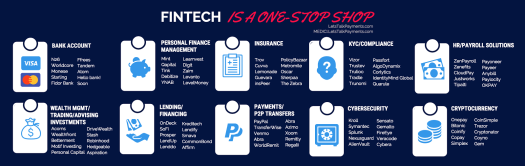
Since this is a more academic audience, my remarks explain how the fabric of the financial industry continues to evolve as new technology players emerge and traditional participants transform their business models.  As part of the school’s Marketing and Finance Super Day, I’ll provide insight into the profound transformations taking place throughout the financial sector while sharing graphics like these from our friends at LetsTalkPayments

bluee

If you’re interested to see the full presentation, I’ll share a link on LinkedIn and Twitter later today after I wrap up my remarks.