Today is FinTech Day at NASDAQ (here’s what you need to know)

The who, what, when, where and why of FinTech Day at NASDAQ, a collaboration between the exchange and my company, Bank Director, that celebrates the contributions of financial technology companies — fintech for short — to banks across the U.S.


photo-18

Who: Bank Director, a privately-held media & publishing company focused on issues fundamental to a bank’s CEO, senior leadership team and board members, teams up with the NASDAQ OMX to showcase various technology-driven strategies and tactics successful banks use to fuel profitable, sustainable growth.

What: FinTech Day at the NASDAQ

When: Today, September 8

Where: The NASDAQ MarketSite (4 Times Square – 43rd & Broadway)

Why: Because who says there is no innovation in banking?  During this day-long event, we keep our focus on a board’s level, exploring growth opportunities made possible by various technology products and services.

To Watch: We will welcome a number of executives from the Fintech community throughout the day, along with one of the country’s biggest (and actually, oldest) institutions: BNY Mellon.  Personally, I’m looking forward to chatting with their Managing Director – Strategic Growth Initiatives, Declan Denehan, at 2 PM ET for an hour-long session focused on innovation, competition and staying relevant. Thanks to our friends at NASDAQ, you can watch the live feed for free (click here to register and watch).  At 3:55 ET, I’ll join our publisher, Kelsey Weaver, to ring the closing bell. A webcast of the NASDAQ Closing Bell will be available (click here or here) if you are keen to see how we wrap up FinTech day.

Of Social Note: To follow the conversation, let me suggest these twitter handles: @bankdirector, @nasdaqomx, @bankdirectorpub and @aldominick. For photos from the ceremony and event, you can visit NASDAQ’s Instagram Page or Facebook page later today.  As we are all about being a part of the community and broader conversations, Bank Director will use #fintech for its tweets.

FinTech Day is September 8

A sneak peek at Monday’s “FinTech Day” at the NASDAQ’s MarketSite in New York City — a collaboration between the exchange and Bank Director that celebrates the contributions of financial technology companies to banks in the U.S.

Well, it was bound to happen.  According to an August 31 column on Re/code, Apple reached an agreement with American Express to work together on its new iPhone payments system.  For Apple, “the introduction of its own iPhone payments product will end years of speculation about when it will take advantage of its massive file of hundreds of millions of credit cards from iTunes and App Store customers to create its own mobile wallet.”  

This new payment system is just one of many very real threats to financial institutions’ business models posed by non-bank competition like Apple, PayPal and Walmart.  Admittedly, I’ve spilled my fair share of digital ink on myriad fintech companies purporting to transform the banking universe.  While some compete with established institutions, I find I am more inclined to focus on those supporting banks’ growth initiatives.  After all, the barriers for new players to enter our industry are significant.  Coupled with the snarling complexities of regulation and compliance already beating down most established institutions, it strikes me that collaboration rather than competition should be the buzz word at technology companies thinking about banking business today.

Screen Shot 2014-09-04 at 9.09.25 PM

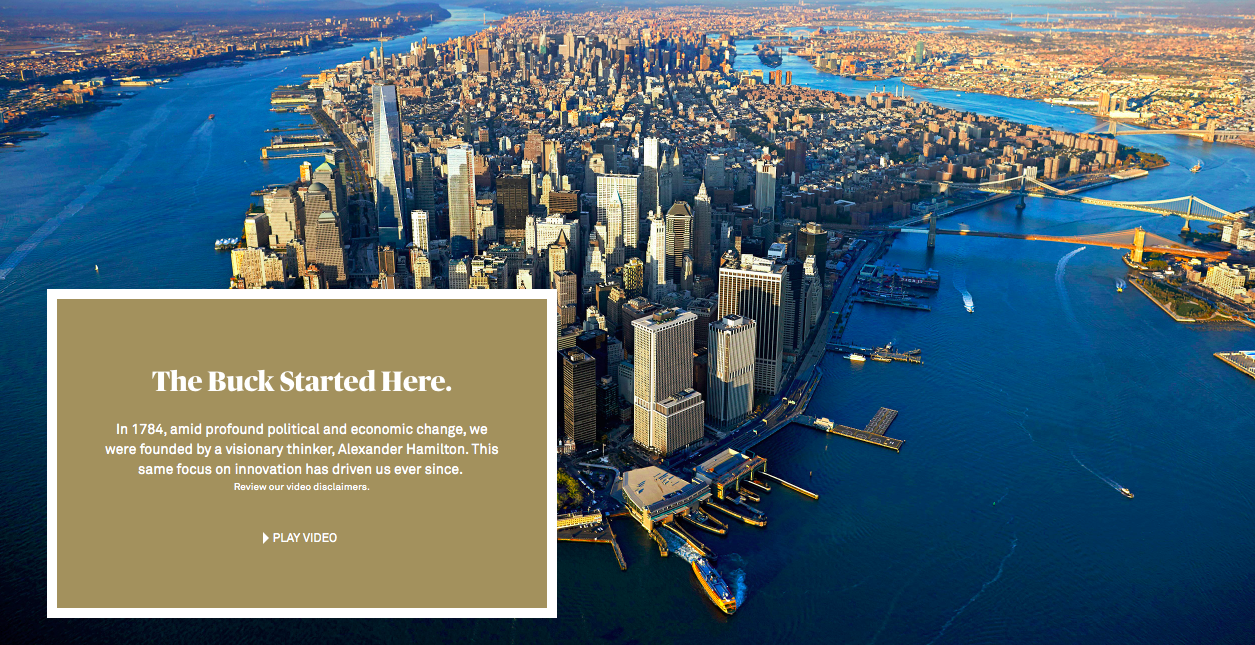
Not so coincidentally, I will explore the issue of competition — along with innovation — with the Managing Director of Strategic Growth Initiatives at BNY Mellon, Declan Denehan, on Monday afternoon.  The two of us will share the stage — and concurrently, the video camera — for an hour-long session that looks at how bank executives can encourage new, innovative business efforts.  BNY Mellon is not just one of the oldest banks in the U.S. — its origins stretch back to the establishment of the Bank of New York in 1784 by Alexander Hamilton — it is also the largest deposit bank in the world.  So as the organization invests and/or partners in companies with strategically important business models or technologies, I’m eager to get Declan’s take on:

  • Innovation frameworks (think cost saves, incrementalism, etc) that may benefit institutions of all sizes;
  • The emerging technologies every bank’s CEO and board should have on their radar; and
  • How banks successfully work within the startup ecosystem.

Thanks to our friends at the NASDAQ, our Q&A will be live-streamed at 2 PM ET (click here to register for free).  I invite you to log on and watch on their site or bookmark BankDirector.com (once the video posts to our homepage, I’ll update this site and share via Twitter).  Additionally, a webcast of the NASDAQ Closing Bell will be available at 
https://new.livestream.com/nasdaq/live or http://www.nasdaq.com/about/marketsitetowervideo.asx if you are keen to see how we wrap up FinTech Day.

Aloha Friday!

Bank Mergers and Acquisitions

Before I head out to California to speak at Moss Adams’ annual Community Banking conference, a look at the principal growth strategy for banks: mergers and acquisitions.

photo-17

Over the last few years, bank advisers have made the case that consolidation should increase due to significant regulatory burdens, lack of growth in existing markets and aging boards and management teams that are “fatigued” and ready to exit our industry.  So as I see prices to acquire a bank on the rise, it is interesting to note that demand for a deal hasn’t slowed.  According to Raymond James, there were 136 acquisitions announced in the 1st half of the year versus 115 announced in the first half of 2013.  Moreover, total deal value is reported at $6.1 billion versus $4.6 billion in the first half of 2013.

Taking this a step further… While activity in the first quarter of 2014 was only slightly ahead of prior years, the second quarter saw a dramatic increase — 74 deals were announced, which is the highest of any quarter since the credit crisis of 2008.  According to this piece by Crowe Horwath (Will 2014 Be the Year of M&A?), annualized, the total number of announced transactions will exceed 260, which is on par with many of the pre-crisis years of the 2000s.

When is a “Deal Done Right?”

As competition to acquire attractive banks increases, so too does the short and long-term risks incurred by the board of an acquiring institution to find the right fits.  In many ways, the answer to “what makes a good buy” depends on the acquiring board’s intent.  For those looking to consolidate operations, efficiencies should provide immediate benefit and remain sustainable over time.  If the transaction dilutes tangible book value, investors expect that earn back within three to five years. However, some boards may want to transform their business (for instance, a private bank selling to a public bank) and those boards should consider more than just the immediate liquidity afforded shareholders and consider certain cultural issues that might swing a deal from OK to excellent.

My Thoughts on CIT’s Acquisition of OneWest

No two deals are alike — and as the structure of certain deals becomes more complex, bank executives and boards need to prepare for the unexpected.  The sharply increased cost of regulatory compliance might lead some to seek a buyer; others will respond by trying to get bigger through acquisitions so they can spread the costs over a wider base. So as I consider this summer’s CIT deal for OneWest, I see a real shift happening in the environment for M&A.  I see larger regional banks becoming more active in traditional bank M&A following successful rounds of regulatory stress testing and capital reviews.  Also, it appears that buyers are increasingly eyeing deposits, not just assets.  This may be to prepare for an increase in loan demand and a need to position themselves for rising interest rates.

A “Delay of Game” Warning

While M&A activity levels are picking up in the bank space, the amount of time from announcement of acquisition to the closing of the deal has widened significantly in some cases.  As noted by Raymond James earlier this week, “this has been particularly notable for acquirers with assets greater than $10 billion where there have been notable delays in several instances given the greater regulatory scrutiny for banks above this threshold. M&T’s pending acquisition of Hudson City was originally expected to close in 2Q13, and through August 18, 2014, was 722 days from the original announcement on August 27, 2012. This case stands out as a prime example of issues surrounding Bank Secrecy Act (BSA) and Anti-Money Laundering (AML) compliance. A more recent example is the delay in the expected closing of BancorpSouth’s two pending acquisitions (Ouachita Bancshares and Central Community Corporation) that have both been pushed out due to similar issues.”

##

When it comes to bank M&A, I sometimes feel like everyone has an opinion.  I’d be interested in your thoughts and welcome your feedback.  To leave a comment on this post, simply click on the white plus sign (within the grey circle at the bottom of this page).  I invite you to follow me on Twitter (@aldominick) where you can publicly or privately share your thoughts with me too.

Aloha Friday!

A Pop Quiz on the Future of Banking

I was not planning on a sixth consecutive column focused on non-bank competition; however, as I prepare to present at Moss Adams’ 14th Annual Community Banking conference in Huntington Beach, California on August 26, a “bonus” post on this topic.  As you will see, today’s piece builds on the premise that many community bank leaders have real opportunities to expand what banking means to individual and business customers by offering services that go beyond a traditional business model. So to wrap up this week, sharpen your pencils for this pop quiz.

1280px-Flag_of_California.svg

Are WE the generation that has learned how to live without a bank?
So much has been written about millenials learning to live without a bank… but ask yourself: have you learned how to live without your bank?  If you could not direct deposit your paycheck, do you have ready alternatives?  I thought so.  Financing for your house? Your business?  I am simply pointing out the inconvenient truth that it is not just the wet-behind-the-ears customers that might already know how to live without a bank.  That said, just because many have learned to live “without” a traditional banking relationship doesn’t mean most want to.  I will let a thought from Diebold support this thought, but before I do, have to ask:

Who’s getting that Kabbage?

As a platform for online merchants to borrow working capital, Kabbage fills a small business lending gap that I have to imagine many community banks should desire (h/t Mitchell Orlowsky @ Ignite Sales).  As I learned this week, Kabbage works with small businesses that are unable to obtain credit from traditional sources. According to TechCrunch, “the startup has closed a $270 million credit facility from Guggenheim Securities, the investment banking and capital markets division of Guggenheim Partners. Atlanta, Georgia-based Kabbage will use the funds to build out its financing business both in the U.S. and beyond. This is one of the largest credit facilities ever issued to a small business lender, and possibly the biggest in the online lending space.” Since opening for business almost three years ago, Kabbage has advanced more than $250 million to small businesses, the company says   Just another example of competition facing many business-oriented banks today.

If Diebold can change, why can’t you?
From the outside looking in, one can make the case that the last truly disruptive technology for banks was the ATM. And when you think ATMs, Diebold has to be top-of-mind.  So when the technology company acknowledges the following, why can’t more banks course correct and be where people are going (and not where they might appear to be)?

The retail financial services industry is in the midst of an epic change and will soon look very different than it did just a few years ago. Consumers are changing what they want out of their banks. Our research proves that consumers want additional convenience to access their bank anytime, anywhere, anyhow, all while maintaining a personal connection with their bank.

##

Regardless of how you did on this pop quiz, please feel free to leave a comment below by clicking on the white plus sign (within the grey circle at the bottom of this page).  I invite you to follow me on Twitter (@aldominick) where you can publicly or privately share your thoughts with me.
Aloha Friday!

Don’t Be Crowdsourced Out Of Business

This is the fifth and final piece in my series on emerging threats to banks from non-financial companies — one that shines a light on the pooling of money from many different people to make an idea happen. Click on any of these titles to read my previous posts: For Banks, the Sky IS FallingPayPal is Eating Your Bank’s LunchThe Bank of Facebook and Is WalMart the Next Big Bank.

Next week kicks off Shark Week on the Discovery channel… maybe you’ve been inspired by the endless commercials hyping this programming during Deadliest Catch?  Perhaps so inspired that you’ve come up with a brilliant new idea that just needs some money to get it off the ground!  As a creative type (you watch Shark Week after all), you can’t be bothered with your community bank’s draconian business loan process.  No, you want to start right away and are going all in with a crowdsourcing platform (there are some 700 or so) to rally the capital you need to get your project off the ground.  After all, your “financial backers” on such a platform will not profit financially — unlike those greedy banks that certainly will — while your great idea will flourish thanks to this oh-so-captivated audience that gave you their money with nothing expected in return.

Against this backdrop, banks have no chance, right?

Hyperbole aside, it may be easy to underestimate the impact of crowdfunding on financial institutions, dismissing these “purpose-driven marketplaces” as nothing more than online outposts where wacky ideas attract even wackier investors.  While banks possess inherent competitive advantages in today’s digital world (e.g. large customer bases, vast amounts of customer and transaction data along with the capabilities to enable payments, security, and financing), keep in mind a proverb that “the shark who has eaten cannot swim with the shark that is hungry.”  To this end, let me repurpose the thoughts of  LinkedIn’s co-founder Reid Hoffman, who opines:

“Crowdfunding relies on the wisdom of crowds to identify, fund and unleash entrepreneurial innovation far more efficiently than the credit rules of banks can.”

Having looked at the competitive stances taken by Wal-Mart, Facebook and PayPal in previous posts, let me shift my focus to two of the more well-known crowd funding marketplaces that are “democratizing access to capital, fueling entrepreneurship and innovation, and profoundly changing the face of philanthropy at unprecedented scale and impact.”  Rather than deep dive their business models, let me share, in their words, why people gravitate to their respective sites.

Indiegogo
Founded in 2008 and headquartered in San Francisco, this site was one of the first to offer crowd funding.

Indiegogo is no longer unique; indeed, numerous crowdfunding sites make billions of dollars of capital accessible to upstarts and entrepreneurs alike.  However, it is one of the most established in the space.  As they share “people usually contribute to campaigns for four different reasons: people, passion, participation, and perks. Often, people contribute to support other people—maybe contributing to the campaign of a friend or another inspiring individual. Others contribute because they’re passionate about a mission, such as women’s health or elementary education. Others are motivated by a desire to participate in something big, like building a new community center in their hometown. And often, people contribute to receive perks, the cool things or experiences they get in return for their contributions.”

Kickstarter
A global crowdfunding platform with a stated mission to help bring creative projects to life.

As the company explains, “Mozart, Beethoven, Whitman, Twain, and other artists funded works in similar ways — not just with help from large patrons, but by soliciting money from smaller patrons, often called subscribers. In return for their support, these subscribers might have received an early copy or special edition of the work. Kickstarter is an extension of this model, turbocharged by the web.”

##

The reason I wrote today’s piece — and the previous four — is simple.  I am convinced that many community banks have real opportunities to expand what banking means to its individual and business customers by offering services that go beyond their traditional business model.  While many bankers recognize the threats presented by Bank of America to their long-term survival, I am concerned that non-bank competition poses an even greater threat.  Essentially, I think more bank CEOs and boards need to take their conversations beyond just cutting branches and full-time employees and consider how they make the bank more efficient by reinventing how they do things.

Whether you agree or disagree, I’d be interested in your thoughts. Feel free to leave a comment below by clicking on the white plus sign (within the grey circle at the bottom of this page) and I invite you to follow me on Twitter (@aldominick) where you can publicly or privately share your thoughts with me.

Is Walmart the Next Big Bank

Part four of a five piece series on emerging threats to banks from non-financial companies. To read parts one through three, click on “For Banks, the Sky IS Falling,” “PayPal is Eating Your Bank’s Lunch” and “The Bank of Facebook.”

At the risk of crashing through an open door, did you know that the retail juggernaut Wal-Mart Stores Inc. launched Bluebird in partnership with American Express late in 2012 so users can direct deposit their paychecks, make bill payments, withdraw cash from ATMs and write checks?  Yes, customers also have access to mobile banking, which includes features like remote deposit capture and person-to-person (P2P) payments.  So does this position Wal-Mart as the next SIFI (*no disrespect to CIT following their announced acquisition of OneWest in a $3.4Bn stock & cash deal earlier this week)?

Walmart bank logo.001

Cue Robin Thicke

According to Wal-Mart, 95% of Americans live within 15 miles of one of its stores.  So I think its fair to say that Wal-Mart continues to blur lines between banking and shopping as it added yet another financial service to its stores across the country.  Indeed, the retailer announced this spring that customers can transfer money to and from any of its 4,000 stores in the U.S. and Puerto Rico.  As this article in Forbes highlighted, low income workers who don’t have traditional bank accounts are turning to prepaid cards and alternatives to checking accounts.  Banks like JPMorgan Chase and Wells Fargo are trying to fill that gap with prepaid and reload able cards — something Wal-Mart has been offering for years.

Where Is That Achilles Heel?

Unlike online competitors to a bank, Wal-Mart enjoys huge brand recognition and an established customer base that feels comfortable walking into their local “branch.”  In fact, banks that already operate inside Walmarts reap among the highest fees from customers of any banks in the nation, according to a WSJ analysis.  But the very demographic the retail company serves — one that expects and demands rock-bottom pricing — may not favor a “B of W.”

Indeed, banking at Wal-Mart is a lot more expensive than shopping there.  As noted by in the WSJ, most U.S. banks earn the bulk of income through lending.  Among the 6,766 banks in the Journal’s examination, “just 15 had fee income higher than loan income — including the five top banks operating at Wal-Mart.”  Would the company really want to race to the bottom in terms of pricing its financial products (ones that would not be federally insured) and compete with its own tenants?

If At First You Don’t Succeed…

It is worth noting that Wal-Mart has tried to get into banking since the late 1990s.  It was thwarted in attempts to buy a savings-and-loan in Oklahoma and a bank in California — and later dropped a bid for its own banking charter in 2007.  While I’m not suggesting the new logo depicted above is anything more than a simple rendering by yours truly, it wouldn’t surprise me if the company explored even more creative ways to compete with financial institutions in the future.

##

To comment on this piece, please click the white plus sign in the bottom right gray circle on this page or share your thoughts with me via Twitter (I’m @aldominick).  Next up, how crowdsourcing sites like Kiva and Kickstarter allow customers to bypass their bank to get funding for a business idea.

The Bank of Facebook

Part three of a five piece series on emerging threats to banks from non-financial companies.  For context on today’s piece, take a look at “For Banks, the Sky IS Falling” and “PayPal is Eating Your Bank’s Lunch” (aka parts one and two).

As banking becomes more mobile, companies that power our mobile lifestyle have emerged as real threats to financial institutions.  While common in Europe — where Google, Vodafone and T-Mobile already compete head-to-head with traditional banks by offering mobile and web-based financial services — let me play out a scenario where Facebook decides to enter the banking space in order to remain relevant to its vast U.S. audience.

FB pix final.001


The New Math?

I recently shared the results of a TD Bank survey — one that shows millennials are banking online and on their mobile devices more frequently than in a branch. In fact, 90% of survey respondents said they use online or mobile tools for their everyday banking activities, such as checking balances or paying bills, and 57% said they are using mobile banking more frequently than they were last year.  So add this idea to  Facebook’s voracious appetite for views, visitors and preference data at a time when users are dialing back on status updates and not sharing candid photos on the site.  The sum of these two parts?  It might not be a matter of will; rather, when, Facebook stands up its own online bank in the U.S.

From Concept to Reality?

What I lay out above isn’t a radical thought; indeed, Fortune magazine ran a story on this very topic (Facebook Wants to be Your Online Bank).  The authors opine:

Someday soon, Facebook users may pay their utility bills, balance their checkbooks, and transfer money at the same time they upload vacation photos to the site for friends to see.  Sure, the core mission of the social media network is to make the world more connected by helping people share their lives. But Facebook knows people want to keep some things — banking, for example — private. And it wants to support those services too.

In a separate piece, Fortune shares “there remains a huge untapped market for banking services, including the exchange of money between family and friends living in different cities, and international money transfers between family in developed and developing countries.”

In fact, Facebook recently made the news when it announced plans to enable commerce from its social networks.  According to a post on Pymnts.com (Is Yelp + Amazon the Mobile Commerce Game Changer?), Facebook is testing a “Buy” button that can enable purchasing directly from a promotion inside a user’s news feed.  Now, I’m not getting into the social commerce conversation; simply pointing out that Facebook’s dive into traditional banking may not be as far off as some might think.

Banks as the New Black?

Facebook is already a licensed money transmitter, enabling the social media giant to process payments to application developers for virtual products.  As much as it has the technological chops — and financial clout — to enter the banking space, its Achilles heal may be the very thing that banks are built on: privacy.  Facebook relies on its members seeing and responding to their friends (and acquaintances) activity and updates.  Noticing a friend make a deposit to the “Bank of Facebook” or take a loan from said institution might not precipitate your own business.  The one thing I can see is an attempt by Facebook to acquire an online bank to jump-start its efforts to reach a specific demographic.  In that case, it might be as simple as “the Bank” powered by Facebook.  Regardless, I’d keep an eye on Facebook’s disclosures and press releases when it comes to payments, social commerce and financial services.

##

To comment on this piece, click on the grey circle with the white plus sign on the bottom right or send me your thoughts via Twitter (I’m @aldominick). Next up, a look at the threats posed to a bank’s business by retail giant Wal-Mart.

PayPal is Eating Your Bank’s Lunch

Part two of a five piece series on emerging threats to banks from non-financial companies.  To read part one, “For Banks, the Sky IS Falling,” click the hyperlinked title.

I am not big on scare tactics, so apologies in advance of my next sentence.  But when HP’s chief technologist for financial services, Ross Feldman calls PayPal “the poster child of new technology,” adding, “they are the No. 1 scary emerging player in the eyes of bankers” how can you not be concerned?  PayPal, a subsidiary of eBay, is already a major player in the person-to-person payment business (P2P) and is poised to take a massive bite out of traditional banking revenue.

photo-16

What is PayPal Up To?

To preface this part of today’s post, keep in mind that as an unregulated entity, PayPal is not subject to the same regulations and compliance expenses as banks.  I share this oh-so-salient point as the company moves towards mobile payments with its apps and one-touch payment services.  The fact that PayPal embraces these offerings isn’t surprising, as so many bank users — myself included — prize 24/7 convenience.  Certainly,  companies that don’t meet user demands will not survive.

Moving away from individual expectations to small business demands, I am seeing more small businesses switch from traditional merchant accounts offered by the banks to those like PayPal’s.  As Nathalie Reinelt of Aite Group’s Retail Banking group shared, “ubiquitous smartphones and inefficiencies in legacy payments have propelled the digital wallet into the payments ecosystem—consumers are interested in it, merchants are willing to adopt it, and financial services companies cannot ignore it.”

So What’s A Banker to Do?

Where I see PayPal falling short — admittedly, most banks too — is an inability to help customers make decisions on what to buy, and where and when to buy it.  So let me shout it as loud as I can: exploit this achilles heel while you still can!  There are companies like MoneyDesktop (a leading provider of online and mobile money management solutions), Ignite Sales (a company whose “recommendation solutions” helps increase customer acquisition & retention while optimizing profitability), etc. that have been stood up to keep banks relevant.  There is a real opportunity for banks to do more than simply allow the same types of services digitally that were once only available in-person.

The window of opportunity is open for banks to expand what banking means to consumers by offering online services that go beyond their traditional business model.  The question boils down to this: will the board & senior leadership accept the risk to try something new to make sure they aren’t just warding off advances from the B of A’s of the world — but also the PayPal’s and their peers?

##

To comment on this piece, click on the grey circle with the white plus sign on the bottom right or send me your thoughts via Twitter (I’m @aldominick).  Next up, pieces on two of the biggest non-bank competitors whose names you may have heard of: Facebook and Walmart.

For Banks, the Sky IS Falling

The first in a five part series on emerging threats to banks from non-financial companies.

For bank executives and board members, competition takes many forms.  Not only are banks burdened with regulation, capital requirements and stress testing, they now have the added pressure of competition from non-financial institutions.  In case you haven’t been paying attention, companies such as Paypal, as well as traditional consumer brands such as Walmart, are aggressively chipping away at banks’ customer base and threatening many financial institutions’ core businesses.  So today’s piece tees up my next four columns by acknowledging the changes taking place within — and immediately outside — our $14 trillion industry.

photo-15

The race is on…

A few months ago, at Bank Director’s annual Growth Conference in New Orleans, I polled an audience of CEOs, Chairmen and board members and found the vast majority (a whopping 91%) have real concerns about non-banks entering financial services.  These bankers aren’t alone in their concerns about competition from unregulated entities.  Just days after polling this audience, Jamie Dimon, the CEO of JPMorgan Chase, warned an audience of investors that he sees Google and Facebook specifically as potential competition for the banking giant.  As he notes, both offer services, such as P2P, that could chip away at income sources for banks.

…and its not pride coming up the backstretch

As Emily McCormick wrote, Facebook is already a licensed money transmitter, enabling the social media giant to process payments to application developers for virtual products. Likewise, the retail behemoth Wal-Mart launched Bluebird in partnership with American Express late in 2012 so users can direct deposit their paychecks, make bill payments, withdraw cash from ATMs and write checks.  This makes the results of a recent TD Bank survey about millennials banking online and on their mobile devices more frequently than in a branch so relevant.  Specifically, 90% of survey respondents said they use online or mobile tools for their everyday banking activities, such as checking balances or paying bills, and 57% said they are using mobile banking more frequently than they were last year.

Along the lines of “what is the industry losing”: eventually you’re going to have a generation that has learned how to live without a bank.  That’s a very sky-is-falling, long-term consequence of not adapting.  But there’s also an opportunity for retail banks to do more than simply allow the same types of services digitally that were once only available in-person.  Banks could actually expand what banking means to consumers by offering online services that go beyond their legacy business model.

What I am hearing

Of course, non-banks can, conceptually, expand what banking means to consumers by offering online services that go beyond legacy business models too.  However, the sheer complexity of entering this market is one reason why we have yet to see a startup that truly rebuilds the banking industry brick by brick.  At least, that is the perspective shared by Max Levchin, founder and CEO of online payments startup Affirm, a company with the goal of bringing simplicity, transparency, and fair pricing to consumer credit.  As the co-founder and former CTO of PayPal, Levchin is one of the pioneers within the payments industry.   In a recent piece in Wired magazine (The Next Big Thing You Missed: Startup’s Plan to Remake Banks and Replace Credit Cards Just Might Work), he notes

I don’t know if I want to own a bank. But I do want to lend money in a transparent way, and I want to create an institution people love… I want to be the community bank equivalent for the 21st century, where people say: ‘I trust my banker. He’s a good guy who’s looking out for me.’

Coopetition anyone?

##

To comment on this piece, click on the grey circle with the white plus sign on the bottom right.  Next up, a look at PayPal, a the e-commerce business that is “eating the banking industry’s lunch.”

Valuing the Bank

San Francisco, CA

Today’s post is something of a “public service announcement.”  As we approach the dog days of summer, a sneak peek at an exclusive event for bank CEOs, CFOs, Chairmen, Presidents and members of the board taking place at the Ritz-Carlton in San Francisco this October.


To learn more about the program, visit BankDirector.com or click here to register.

Know Your Tribe

So… I initially planned to dive into interest rate risk this morning. Prevalent in most M&A conversations taking place in bank boardrooms today, I thought to focus on banks working to protect their equity value as interest rates rise. However, in reviewing the outline for today’s piece, I realized a different kind of risk inspired me: the risk of becoming something you are not.  While I do anticipate posting a piece on interest rate risk in the near future, today’s column parallels the thoughts of Seth Godin.  Specifically, a blog he authored this week entitled “In Search of Meaningful.”

cat550006

In his piece, Seth looks at online media and how “people have been transfixed by scale, by numbers, by rankings… how many eyeballs, how big is the audience, what’s the pass along, how many likes, friends, followers, how many hits?  You cannot win this game and I want to persuade you… to stop trying.”  It strikes me that he could just as well be writing about financial institutions competing for relevance in today’s competitive and crowded environment.  While I’ve linked to his post above, see if you follow my logic based on this representative quote:

It’s no longer possible to become important to everyone, not in a reliable, scalable way… But it is possible to become important to a very-small everyone, to a connected tribe that cares about this voice or that story or this particular point of view. It’s still possible to become meaningful, meaningful if you don’t get short-term greedy about any particular moment of mass, betting on the long run instead.

Over the past six months, I have been fortunate to hear how numerous bank CEOs and Chairmen plan to position their institutions for long-term growth.  As I process Godin’s perspective, let me pay his perspectives forward with three of my own specific to community banks:

#1 – You Don’t Have To Be BIG To Be Successful

By this I mean smarts trumps size any day of the week.  While more banks put their liquidity to work, fierce competition puts pressures on rates and elevates risk.  While easy to frame the dynamics of our industry in terms of asset size, competing for business today is more of a “smart vs. stupid” story than a “big vs. small” one.

#2 – You Don’t Have To Be Everywhere

Nor can you be — so stick to what you know best.  I know that margin compression and an extra helping of regulatory burden means times couldn’t be more challenging for growth in community or regional banking.  But that doesn’t mean you have to be all things to all people.  Case-in-point, I was lucky to spend some time with Burke & Herbert Bank’s CEO in Northern Virginia earlier this week.  As they say, “the world has changed quite a bit since 1852 (*the year the bank opened its doors) – that you may be conducting most of your life from your computer, smartphone and/or whatchamajiggy. That’s why we constantly adapt to the way you live and bank.”  Today Burke & Herbert Bank has more than $2 billion in assets and 25 branches throughout Northern Virginia.  Still, they remain a neighborhood bank, choosing to “stay local” as Virginia’s oldest bank.

#3 – You Don’t Have To Do What Everyone Else Does

As Godin writes, the “problem with generic is that it’s easy go as well as easy come.”  Just because USAA rolls out a new mobile offering doesn’t mean you need to — and if BofA decides to reprice a product, can you really compete with them on price?  So which community banks are doing it right in my opinion?  Well, if you’re in Nashville and focused on the medical and music & entertainment industries you probably know Avenue Bank, if you’re a business in the Pacific Northwest, you most likely work with (or at least respect) Banner Bank.  And if you are in the oil and gas business in Texas, First Financial is a big player.  The common thread that binds these three banks together: they have a laser-like focus on their ideal customer base.

##

To comment on this piece, click on the green circle with the white plus (+) sign on the bottom right. If you are on twitter, I’m @aldominick. Aloha Friday!