FinXTech’s Advisory Group

I’m checking in from the edge of the Rocky Mountains — from the iconic Broadmoor in Colorado Springs — where I’m joined by FinXTech’s President, Kelsey Weaver and Bank Director’s Director of Client Relations, Laura Proffitt.  The three of us are here to participate in the Association for Financial Technology’s (AFT) Fall Summit where later today, I will have the opportunity to introduce a new partnership between AFT and FinXTech.  In advance of those comments, I thought to pull the curtains back on a special  Advisory Group that we are building to develop FinXTech in the “best” possible manner. 

As new approaches to delivering financial services emerge, nearly every technology company here in Colorado has practical tools, techniques and talent to help financial institutions prepare for the future.  It is an exciting time to be part of a community like the one AFT draws, as I believe new players will continue to emerge while traditional participants transform their underlying business models to better participate and compete in the coming years.

As the financial industry continues to evolve, so too does the community that my team supports.  As a peer-to-peer based platform powered by Bank Director, FinXTech connects a hugely influential audience around shared areas of interest and innovation; specifically:

  • FinTech companies who view banks as potentially valuable channels or distribution partners;
  • Banks looking to grow and/or innovate with FinTech companies’ help and support; and
  • Institutional investors, venture capitalists, state & federal regulators, government officials and academicians helping to shape the future of banking.

Rather then create this community in isolation, we are doing so with the help and support of industry leaders with various backgrounds.  Case-in-point, we are recruiting highly opinionated, ridiculously informed thought leaders to “think around the corner” with us as part of FinXTech’s Advisory Group.

So as we get ready to spend a few days with our peers at this week’s conference, Kelsey, Laura and I are proud that the following men and women have accepted our invitation to share their time and intelligence with us as part of FinXTech’s council:

  • Thomas P. Brown, Partner, Paul Hastings LLP
  • Michael Butler, President & CEO, Radius Bank
  • Michael M. Carter, Founder & CEO, BizEquity
  • Ryan Gilbert, General Partner, Propel Venture Partners
  • John C. Gill, Chief Operating Officer & Chief Risk Officer, Somerset Trust Company
  • Joe Guastella, Global & U.S. Managing Principal, Financial Principal, Deloitte Consulting LLP
  • James C. Hale, III, Founding Partner, FTV Capital
  • Aditya Khujekar, CEO & Co-Founder, Let’s Talk Payments
  • Jimmie Lenz, Director of Technology Risk, Wells Fargo, Wealth and Investment Management
  • Vivian Maese, Partner, Latham & Watkins
  • Bill McNulty, Entrepreneur in Residence, Capital One
  • John E. Pizzi, CEO, BaseVenture
  • Gregg M. Schoenberg, Founder, Westcott Capital
  • Chris Skinner, CEO, The Finanser Ltd
  • Christa Steele, Former President, CEO & Board Member, Mechanics Bank; Founder, Boardroom Consulting LLC
  • John Thompson, SVP & Leader, Program Team, CFSI
  • Andres Wolberg-Stok, Director, Citi Fintech
  • Jon Zanoff, Founder, Empire Startups

In addition to this awesome group, we have some pretty powerful folks that we recently invited (so this list can and will expand in the coming weeks).  But for those of you here at AFT, you will hear Kelsey, Laura and me talk about our enthusiasm for this group & the efforts being made to establish FinXTech as a catalyst that (1) connects a highly influential group of people who care about the future of financial services, (2) are committed to meaningful transformation and are (3) empowered to make change happen.

##

To learn more about what we’re doing, I invite you to visit FinXTech.com, a site we designed to deliver authoritative, relevant and trusted content for banks, Fintech companies, investors and services firms.

Creating Better Banking Experiences

Earlier this week, we published our quarterly print issue of Bank Director magazine.  If you haven’t seen it, our talented editor, Naomi Snyder, shines a light on the “tech bets” being made by Fifth Third, a $142 billion asset institution.  Having worked for an IT firm, I appreciate the three questions their President & CEO, Greg Carmichael, asks his team to consider before investing in new technologies:

  1. Does it improve the bank’s ability to serve customers?
  2. Does it drive efficiency?
  3. Does it create a better experience for customers?

As he shares, “not every problem needs to be solved with technology… But when technology is a solution, what technology do you select? Is it cost efficient? How do you get it in as quickly as possible?  You have to maintain it going forward, and hold management accountable for the business outcomes that result if the technology is deployed correctly.”

“The challenges are how to grow the franchise and reposition the franchise to serve our customers in the way they want to be served, which is more of a digital infrastructure.”

-Greg Carmichael, President & CEO, Fifth Third Bank

While Fifth Third plans to invest some $60M this year in technology, Naomi notes that the bank doesn’t have an R&D lab with a staff separated from the rest of the bank and dedicated to inventing things (like its competitor U.S. Bancorp).  Nor does Fifth Third have the reputation of being highly innovative, like a BBVA.  Nonetheless, the regional bank, headquartered in Cincinnati, has a laser focus on developing practical solutions to everyday problems.

So to build on this issue’s cover story — and the efforts we’re making with our FinXTech platform — let me offer my take on who I consider standouts in the payments, lending and retail space today.  Those addressing “everyday problems” may find inspiration from the work being done and/or want to explore partnership opportunities.

Payments + Transfer

When one thinks about payments — and the movement of  value via cash, credit card, check and other transactions — some big names come to mind: Apple Pay, Chase Pay, Square, Paypal, etc.  But don’t sleep on these companies:

Lending

In the lending sector, a lot of people continue to talk about LendingClub’s travails, scoff at SoFi’s change of heart from anti-bank to pro-partnerships and follow Prosper’s efforts to shore up its business.  Within the lending space, these companies also deserve time and attention:

  • Affirm, a digital lender that provides installment financing;
  • Orchard, a technology and infrastructure provider for marketplace lending;
  • Lendio for small business loans;
  • Even, a new kind of financial app that turns variable pay into a steady, reliable income; and
  • Earnest,  a technology-enabled lender that enables one to consolidate and refinance  student loans.

Retail banking

Considering the core functions of retail banking remain the establishment of deposits and making of loans, those pushing the envelope in a way consumers desire include:

  • Ally Bank, known for its “No Branches = Great Rates” tag line;
  • Atom Bank, one of the first Challenger Banks in the UK;
  • Tandem, a new digital bank in the UK;
  • Moven, a pioneer in smart phone banking; and
  • Simple, part of the BBVA family that is reinventing online banking.

While these banks are pushing forward, many legacy institutions will be challenged to meet the expectations of their customers.  They will need to assess the additional risks, costs and supervisory concerns associated with providing new financial services and products.  Accordingly, I’m not alone in believing that financial institutions need to invest in services “for life’s needs” through collaboration and partnerships with companies like those shared in today’s post.

##

I realize there are a number of companies “doing it right” in these three sectors – and this simply highlights some of the players that standout to me.  Feel free to comment below on others that I might highlight in future posts.

Without A Destination, What Good Is A Map?

Highlight: as executives grapple with a fast-changing operating environment that requires partnerships and collaboration, many wrestle with where they want to be vs. where they need to be.

In this video, I share my thoughts on growing through partnerships (between traditional banks and financial technology firms), becoming “data richer” and enhancing the customer experience you’re delivering.

FWIW, this video lives on FinXTech.com, a site designed to provide authoritative, relevant and trusted content to a hugely influential audience, specifically:

  • Fintech companies who view banks as potentially valuable channels or distribution partners;
  • Banks looking to grow and/or innovate with fintech companies’ help and support; and
  • Institutional investors, venture capitalists, state & federal regulators, government officials and academicians helping to shape the future of banking.

As a platform powered by Bank Director, FinXTech connects this hugely influential audience around shared areas of interest and innovation.  FinXTech specializes in (1) bringing valuable bank relationships to fintechs, and (2) offering banks valuable relationships with fintechs in a way no one else does.

The FinTech Ecosystem

Last Friday, I had the pleasure to be invited to the White House’s FinTech Summit, where, as the Wall Street Journal reported, the half-day event “largely focused on how government agencies can tap into the innovation, in which new firms are offering small-business owners and consumers faster forms of loans and digital payments.”  Certainly, collaboration between technology companies and traditional financial institutions has increased — think proofs of concept, partnerships and strategic investments — but much still needs to be done.  As I took notes during the event, I did so with an eye towards the platform we built — and the ecosystem beginning to develop — with FinXTech.

FinXTech is a platform that promotes collaboration between the most forward thinkers in the industry – in order to create real innovation, change and a better future for all.

As new technology players emerge and traditional participants begin to transform their business models, there is growing sentiment that successful institutions need to enable financial services for life’s needs through collaboration and partnerships with the very fintech companies that once threatened to displace them.  I tackled this issue in a piece I wrote (A Fear of Missing Out).  A few things didn’t make the final cut that I thought to share here.  Of note:

  • I asked Michael Tang, partner and head of global digital transformation and innovation at Deloitte, how might bank executives determine the amount of money they should allocate to innovation.  He shared that industry metrics range from 2-7% of revenues (and also depend on incremental or moonshots-type initiatives).
  • Even as technology will force narrowing margins, there may be opportunities to develop new profit pools and forcing some incumbents to “move upstream” to serve more sophisticated and profitable cohorts (source: Disaggregating the impact of fintech).
  • The playing field will level as firms of all sizes will be able to take advantage of emerging networks and platform-based services. Ultimately lowering cost, improving compliance, and focusing on markets where they have a true competitive advantage (source: Disaggregating the impact of fintech).

The rapid transformation of the financial services industry — due to technological innovations and shifting customer expectations — is quite remarkable.  If you missed what Adrienne Harris, special assistant to the president for economic policy, wrote in a blog post following the White House FinTech Summit, it is worth your time to read.

Banks Have to Grow to be Competitive

As I reflect on my time at Bank Director’s Growing the Bank conference, I can’t shake the fact that many banks across the United States continue to struggle to grow their deposits and/or expand asset bases.  What follows is a piece authored by Tim Melvin, a gifted writer who joined us at the Four Seasons outside of Dallas.  Tim specializes in value investing and has written numerous articles in various publications on the subject of value investing, the stock market and the world around us.  With his permission, I’m sharing his perspectives on our event.

I just returned from the Bank Director 2016 Growing The Bank Conference in Dallas and I have to say it was one of the more interesting meetings I’ve attended this year. This conference covered everything from the 30,000 foot view of the rapidly changing banking industry to the nuts and bolts of day-to-day stuff and I came away with an even deeper appreciation of the industry and the opportunity.

The threats and potential posed by what are commonly known as Fintech companies was heavily featured during the two-day event. Nobody is quite sure if they’re friend or foe yet and there was a lot of wary circling like a road weary cowboy and an unsure Indian trying to decide to break bread together or lock hands on throats. Mobile and cybersecurity were also topics on everyone’s minds, as both are going to play an enormous role in deciding if a bank grows or withers away to obscurity.

Closer Look At Fintech

The Fintech discussion was perhaps one of the most interesting of the meeting. While banks may see some of the Fintech lenders like LendingClub (NYSE: LC), Sindeo and On Deck Capital (NYSE:ODNK) are seen as a real threat to traditional lenders, I think we will find that it’s not as big a threat as we might currently think.

The first time we have a credit hiccup or recession, these lenders will find out just how important to success a core deposit-based funding source can be. When markets dry up in the bad times, investors aren’t going to as easy a source of funds as they are in the current benign and yield starved markets. I think what’s far more likely to happen is the technology that allows for high-speed decision making, easier underwriting and razor focused marketing will end up being sold to the banks to improve their offering.

As Steven Hovde of the Hovde Group warned the crowd in Dallas, “Fintech and banks are going to end up marrying up. It’s the only way you are both going to survive. If you think you can do it on your own, you are sadly, sadly mistaken.”

Naomi Snyder, the editor at Bank Director, put a little differently when she wrote an article for the magazines website following the conference: “The tech companies have something many banks lack: innovative products and simple, customer-friendly digital solutions for a changing world. Meanwhile, the banks have some things many of the tech companies lack: actual customers and a more stable funding base.”

Although the fast-moving high tech kids of Fintech and the stuffy old bankers may at first appear to be as mismatched, as James Carville and Mary Matalin may need to find a partnership that has worked out as well as theirs has. They may not initially like each other but they need each other.

Mobile Banking

I think Dave Defazio of Strategycorps scared a lot of community bankers when he talked about the future of mobile banking in his session. He pointed out the tremendous lead that the bigger banks have in this space and the competition from apps like Apple Pay, Venmo and other apps that, to be honest, I’ve never even heard of before but are increasingly popular for managing finances and making payments among the millennial set. For folks who think the ATM and drive-up window are newfangled innovations the world of mobile banking is a bit frightening. What makes it even more frightening is that if you don’t compete well in the mobile space, you won’t retain the next generation of customer. They expect everything to be done on the fly and right now using mobile devices.

The millennial customer is just different. The use their mobile device to pay for their Starbucks (NASDAQ: SBUX), pay their share of the bar tab, watch movies, read books, pay bills and manage their finances. Apparently you can even use an app to collect your boarding pass, as I found out after running out of the bar after the first day to get to the business center and print out my boarding pass exactly 24 hours before takeoff. When I returned and expressed my disappointment at getting a B slotting on Southwest (NYSE: LUV) I was told that I should just get the app to avoid this in the future.

I didn’t even know there was an airplane app, but now I can count myself among the airplane app aristocracy thank to my slightly younger and far more tech savvy friends at Bank Director.

I caught up with Defazio on Tuesday morning and we chatted a bit more about the challenges and opportunities of mobile banking. He told me over coffee, “Banks are not just competing against other banks’ mobile apps, but instead against the very best apps on the planet, apps like Uber to Amazon (NASDAQ: AMZN) to Waze. Customer expectations are very high, and banks must make it their mission to have an app that people can’t live without. Community banks must do a better job of responding to changes in customer behaviors and expectations. The big banks have raced out to a big lead. The time is now for banks to go beyond transactions and do a better job of connecting with their customers’ mobile lifestyles. In particular, I’m seeing the big banks add mobile tools that assist people with their shopping tasks. They know that helping people save a dollar is just as good as helping them make a dollar of interest.”

I chatted with several bankers and the discussion of mobile frankly scares many of them. One banker said if this is the future of banking, then community banking is just dead. I think he overstated the case, but community banks are going to have to aggressively look for partners like Strategycorps to build and offer a much better mobile experience. Those that can’t, or don’t want to, should consider hanging out the for sale sign right away as they simply won’t be competitive in the future. They can probably get a better multiple in a deal now than in a few years when deposits are bleeding out to more mobile sensitive banks at a rapid rate.

Steven Hovde gave a talk on the search for efficiency in the industry. Hovde is an investment banker serving community banks, a majority owner of several smaller banks and is part owner of a real estate development company that borrows from banks so he sees all sides of the industry. He pointed out that the more efficient a bank is the higher then returns on assets and the higher valuation of the institutions stock. Both of these make for happier shareholders. He said the best way to gain efficiency in the banking industry today is to grow the size of the bank.

Right now, we have historically low net interest margins, growing regulatory costs and a huge need to spend money on technology, especially in mobile and cyber security. GDP growth is slow and there are no real signs that it will improve dramatically anytime soon. The loan markets are increasingly competitive and the regulators are focusing on the one area where community banks had an edge, commercial real estate. It really is a “grow or die” world and the majority of banks need to get to $1 billion in assets to quit operating in survival mode and the $5 billion level to thrive in the current economy.

The best way to grow remain via mergers and acquisitions. Hovde told us, “As the regulatory environment becomes increasingly difficult to maneuver for smaller banks, we expect deal activity for smaller institutions to continue as they search for greater efficiencies.” While this is not necessarily great news for bankers running smaller banks, it’s good news for me as bank stock investor and I continue to seek out and buy smaller publicly traded banks.

That’s A Wrap

The Growing the Bank Conference is more of a nuts and bolts, but I walked away with two overriding insights. First banks must look to partner with or even buy the innovative aggressive fintech companies. They cannot compete with them without disastrous consequences so they must partner with them. For their part, most of the fintech competitors need the banks and their large customer base and deposit funding. It may be a shotgun wedding in some cases, but nuptials will be needed for both to survive and thrive.

My second takeaway is that although it sounds like a slogan, “Grow or Die” is a real thing. To thrive in today’s difficult markets, banks need to grow to at least that $5 billion asset level. With the exception of a few niche small town and rural banks the $1 billion asset level is really needed just to be a viable competitor. The best way to grow in a slow growth economy is to buy smaller banks or engage in a merger of equals that increases returns for the ban, as well as shareholders. All of this is good news for us as small bank investors.

The Trade of the decade in community bank stock rolls on.

##

To read more of Tim’s work on Benzinga, click here and to follow Tim on Twitter, his handle is @timmelvin.

Early Takeaways from Bank Director’s Growing the Bank Conference

With continuous pressure on bankers to grow earnings, developing clear strategies, repeatable practices and incorporating exceptional user-experience technologies has to be high on almost every executives to-do list.

How do you bank?

By taking a pause before answering this question, you will appreciate how, regardless of age, we all expect greater pricing transparency, ease of use and always-on access to personal information as part of an integrated banking experience.  The challenge for most bankers?  What many consider state-of-the-art today — in terms of features and services — quickly becomes part of the norm that will be expected and insisted upon in the coming years.

At this morning’s Growing the Bank Conference, I jotted down a few thoughts that builds on this “how do you bank” query.

  • When it comes to the classic build or buy technology decision, partnerships are now de rigueur — with 87% of our 240+ person audience indicating they see technology as presenting opportunities to banks (and not threats).
  • Historically, banks organize themselves along a line of products; however, many have suggested re-orienting operations around customer needs and expectations.
  • To retain deposits, banks should ramp up their customer relationship programs, increase cross-selling efforts and invest in product lines that attract stable deposits.

While we haven’t gotten deep into the payments space (yet), I do encourage bank executives to think about the dramatic growth in that area of banking  — which continues to transform how efficiently banks connect with their customers.  Likewise, I wasn’t kidding when I suggested attendees spend some time reading the OCC’s “Supporting Responsible Innovation” white paper.

Finally, a “did-you-know” that I meant to share from the stage during my conversation with Brian Read, Executive Vice President, Retail Banking, Umpqua Holdings Corp. and Umpqua Bank.  According to the Federal Reserve, 85% of mobile banking users — a bank’s “most advanced” clients — still use branches from time to time. So as he shared with us, there really is a place for a physical presence in banking today.

##

*FWIW, we’re in Dallas at the Four Seasons Resort and Club Las Colinas in Dallas, Texas where the annual Byron Nelson golf tournament wrapped up yesterday evening.  The picture above is of Jordan Spieth — the former number one player in the Official World Golf Ranking and two-time major winner — a gift to some of my team who were intent on getting a photo of him.  As a former student of St. Marks, I will not hold it against him that he went to Jesuit, a rival high school.

The Convergence of Bob Dylan and Banking

Some of the most visible innovations in the banking world today are platform-based, data intensive and capital light.  Personally, I’m just as encouraged by “incumbent” institutions supporting new fintech entrants — with infrastructure and access to services — as I am creative new companies (like Nymbus, nCino, etc.) providing smaller and mid-sized banks with sophisticated new capabilities.

This video, filmed during Bank Director’s annual FinTech Day in New York City at the Nasdaq Marketsite, is but one of eight videos we’ve shared on BankDirector.com.  To see what industry leaders from Silicon Valley Bank, the Fintech Collective, BizEquity, DaonDeloitte Consulting and the World Bank’s IFC think are the challenges & opportunities facing traditional banks, I invite you to take a look at this compilation of videos FinTech Day Recap: Rapid Transformation Through Collaboration.

##

Al Dominick is the President & CEO of Bank Director, a privately held media & publishing company designed around strategically important business issues that a CEO, executive and/or board member(s) need to know — and be prepared to address. An information resource to the financial community since 1991, we publish Bank Director magazine, host conferences like “Acquire or Be Acquired,” conduct board-level research, provide board education & training programs, run BankDirector.com… and recently launched FinXTech.

Cybersecurity and the Fintech Wave

Earlier this month, at Bank Director’s FinTech Day at Nasdaq’s MarketSite in New York City, I noted how many technology firms are developing strategies, practices and tools that will dramatically influence how banking gets done in the future. Concomitantly, I expressed an optimism that banks are learning from these new players, adapting their offerings and identifying opportunities to collaborate with new “digital-first” businesses.  Unfortunately, with great opportunity comes significant risk (and today’s post looks at a major one challenging bank CEOs and their boards). 

By Al Dominick, President & CEO, Bank Director

To grow your revenue, deposits, brand, market size and/or market share requires both strong leadership and business strategy.  Right now, there are a handful of banks developing niche vertical lines of business to compete with the largest institutions. For instance, East West Bancorp, EverBank Financial, First Republic Bank, Opus Bank, PacWest Bancorp, Signature Bank and Texas Capital Bancshares.

Just as compelling as each bank’s approach to growing their business is the idea that new competitors in direct and mobile banking will spur the digitalization of our industry.  I am a firm believer that through partnerships, acquisitions or direct investments, incumbents and upstarts alike have many real and distinct opportunities to grow and scale while improving the fabric of the financial community.

However, with myriad opportunities to leverage new technologies comes significant risk, a fact not lost on the bank executives and board members who responded to Bank Director’s 2016 Risk Practices Survey, sponsored by FIS.  For the second year running, they indicate that cybersecurity is their top risk concern.

More respondents (34 percent) say their boards are reviewing cybersecurity at every board meeting, compared to 18 percent in last year’s survey, indicating an enhanced focus on cybersecurity oversight. Additionally, more banks are now employing a chief information security officer (CISO), who is responsible for day-to-day management of cybersecurity.

However, the survey results also reveal that many banks still aren’t doing enough to protect themselves—and their customers. Less than 20 percent of respondents say their bank has experienced a data breach, but those who do are just as likely to represent a small institution as a large one, further proof that cybersecurity can no longer be discussed as only a “big bank” concern.

For those thinking about the intersection of fintechs and banks, take a look at our just-released 2016 Risk Practices Survey. This year, we examine risk governance trends at U.S. banks, including the role of the chief risk officer and how banks are addressing cybersecurity. The survey was completed in January by 161 independent directors, chief risk officers (CRO), chief executive officers (CEO) and other senior executives of U.S. banks with more than $500 million in assets.

Key Findings Include:

  • Sixty-two percent of respondents indicate their bank has used the cybersecurity assessment tool made available by the Federal Financial Institutions Examination Council, and have completed an assessment. However, only 39 percent have validated the results of the assessment, and only 18 percent have established board-approved triggers for update and reporting. FWIW, bank regulators have started to use the tool in exams, and some states are mandating its use.
  • Seventy-eight percent indicate that their bank employs a full-time CISO, up from 64 percent in last year’s survey.
  • The majority, at 62 percent, say the board primarily oversees cybersecurity within the risk or audit committee. Twenty-six percent govern cybersecurity within the technology committee.
  • Forty-five percent indicate that detecting malicious insider activity or threats is an area where the bank is least prepared for a cyberattack or data breach.
  • Just 35 percent test their bank’s cyber-incident management and response plan quarterly or annually.

Clearly, banks are increasingly relying on complex models to support economic, financial and compliance decision-making processes.  Considering the full board of a bank is ultimately responsible for understanding an institution’s key risks — and credibly challenging management’s assessment and response to those risks — I am pleased to share this year’s report as part of our commitment to providing timely & relevant information to the banking community.

Banking on Fintech DNA

As we talked about at FinTech Day last Tuesday, technology will play a fundamental role in changing the dynamics of banking, be it shining a light on out-dated practices to dramatically enriching the services and experiences being offered to customers.

By Al Dominick, President & CEO, Bank Director

As our editor-in-chief recently wrote, “technology has always been integral to banking, bringing both speed and efficiency to a transaction-intensive business. But in recent years, technology has stepped onto center stage as a prime component in every bank’s growth and distribution strategy. Technology has, in effect, gone from being a way to save money (a crucial function that it still fulfills) to a way to make money. Much of this activity is being driven by the continued growth of mobile and online banking.”

During a panel session entitled “Banking’s New DNA,” I noted how numerous financial technology companies are developing new strategies, practices and products that will dramatically influence the future of banking.  Within this period of transformation, where considerable market share is up for grabs, I believe ambitious banks can leapfrog both traditional and new rivals.

I find the narrative that relates to banks and fintech companies has changed from the confrontational talk that existed just a year or two ago.  As we found at this year’s FinTech Day in New York City, far more fintech players are expressing their enthusiasm to partner and collaborate with banking institutions who count their strengths and advantages as strong adherence to regulations, brand visibility, size, scale, trust and security.  For me, considering such a partnership affords a bank’s leadership team an important chance to look in the mirror and ask:

  1. Are we exceeding our customer’s digital experience expectations?
  2. How do we know if we’re staying relevant?
  3. Do we have a “Department of No” mindset?

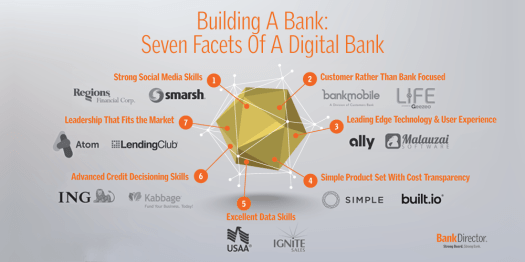
I elaborate on these pieces in an article now up on BankDirector.com; to read it, please click here.  Likewise, take a look at the seven facets of building a digital bank.  When it comes to the DNA one needs to compete in the future, I find these elements essential to any operation. 7 elements of a digital bank - by Bank Director and FinXTech

Feel free to comment on these questions and the elements shared above.  What else do you think could/should be added and considered?

3 Quick Takeaways from #fintech16 (aka Bank Director’s FinTech Day at Nasdaq’s MarketSite)

As evidenced by the various conversations at yesterday’s FinTech Day, the next few years promises to be one of profound transformation in the financial sector.

By Al Dominick, President & CEO, Bank Director

At a time when changing consumer behavior and new technologies are inspiring innovation throughout the financial services community, I had a chance to open this year’s FinTech Day program with a look at how collaboration between traditional institutions and emerging technology firms bodes well for the future.  With continuous pressure to innovate, banks today are learning from new challengers, adapting their offerings and identifying opportunities to collaborate. At the same time, we continue to watch as many fintech companies develop strategies, practices and new technologies that will dramatically influence how banking gets done in the future.

Personally, I believe this is a very exciting time to be in banking — a sentiment shared by the vast majority of the 125+ that were with us at Nasdaq’s MarketSite yesterday.  While I plan to go deeper into some of the presentations made in subsequent posts and columns on BankDirector.com, below are three slides from my welcoming remarks that various attendees asked me to share.

7 elements of a digital bank - by Bank Director and FinXTech

For the above image, my team took a step into an entrepreneurs shoe’s and envisioned an opportunity to build a new, digital-only bank from the ground up.  We consider these seven facets as base elements for success — and the companies listed provide real-life examples of financial institutions & fintechs alike that we see “doing it right.”

FinTech Day Deck1 (dragged)

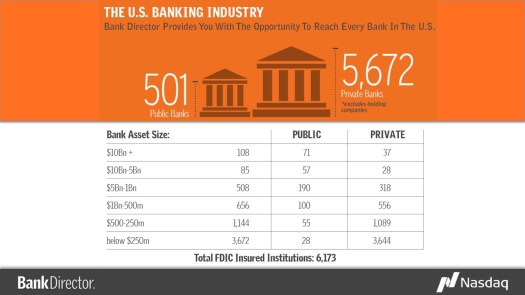
The irony of sharing an idea for a new bank?  Newly chartered banks (de novos) are basically extinct.  So for a program like FinTech Day, I thought it was imperative to provide context to the U.S. banking market by looking at the total number of FDIC-insured institutions.  These numbers are accurate as of last Friday.

FinTech Day Deck1 (dragged) 1

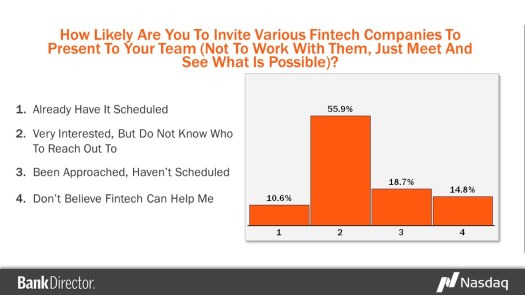
This final slide comes from our annual Acquire or Be Acquired conference in Arizona.  There, we welcomed 930+ to explore financial growth options available to a bank’s CEO and board.  To open our second full day, I polled our audience using a real-time response device to see how likely they are to invite a fintech company in for a conversation.  As you can see from the results above, real opportunities remain for meaningful dialogue and partnership discussions.

##

Thanks to all who joined us, the speakers that shard their insights and opinions and our friends from Nasdaq!

March 1 is FinTech Day

Tomorrow is FinTech Day… here is what you need to know in advance of this exclusive one-day event.

What: Bank Director’s FinTech Day

When: Tuesday, March 1 2016

Where: Nasdaq’s MarketSite (4 Times Square – 43rd & Broadway)

Overview: The next few years promises to be one of profound transformation in the financial sector. Clearly, the fabric of the industry continues to evolve as new technology players emerge and traditional participants transform their business models. At FinTech Day, we address trends like the personalization of banking, the challenges of scaling a company in our highly regulated industry and what shifting customer expectations portend for all.  For the full agenda, click here.

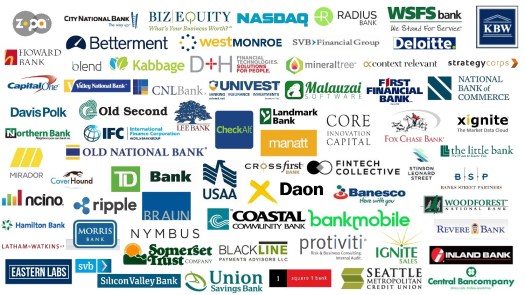
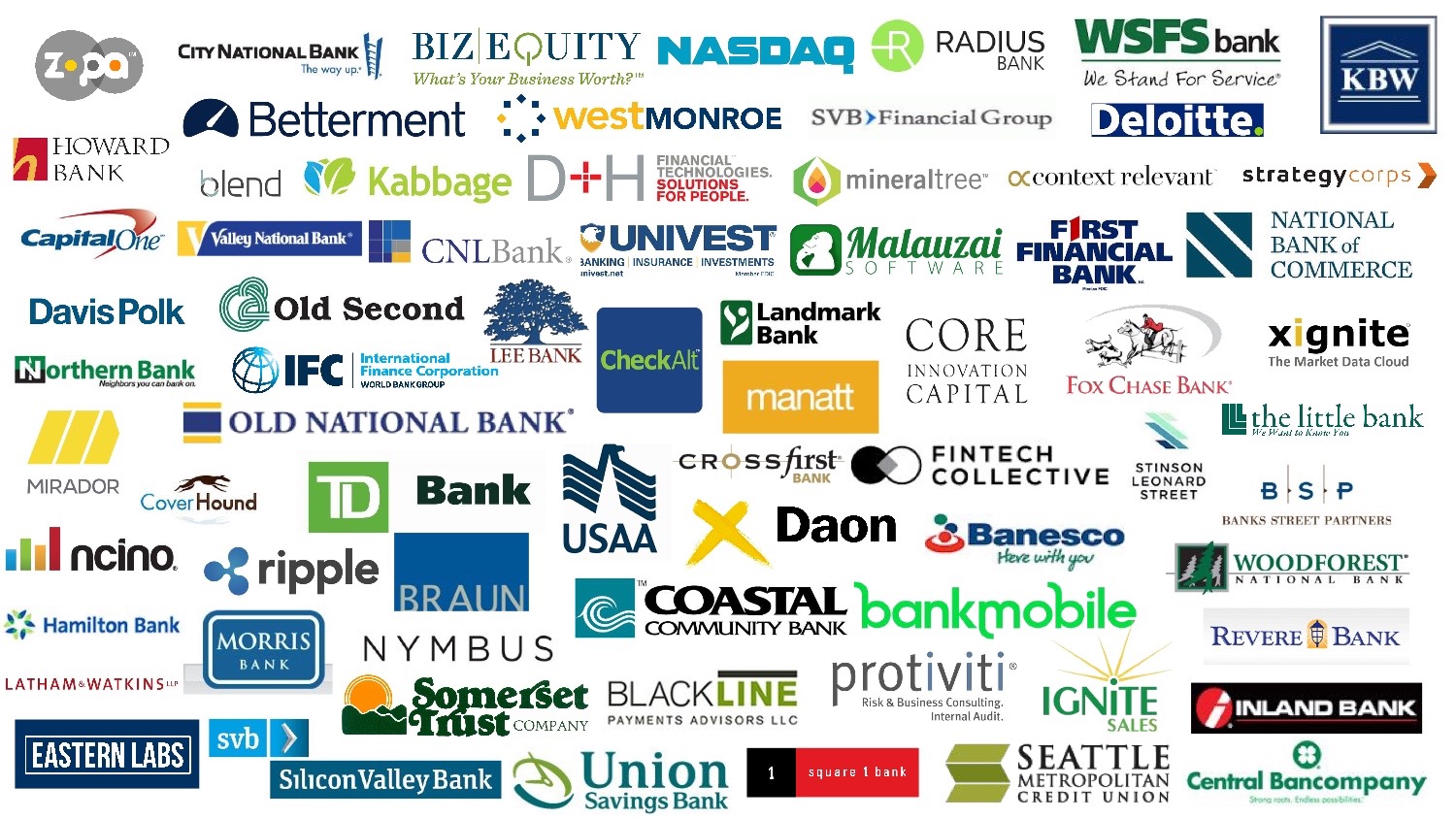
Who is coming: Attendee lists are provided to all confirmed; unfortunately, we are at capacity and cannot accept any additional registrations.  Below, I highlight the various businesses represented.

A look at who is coming to Bank Director and FinXTech's FinTech Day on March 1

FinXTech: In addition to connecting participants from across the community, I am  excited to introduce a new digital division — FinXTech — to provide authoritative, relevant and trusted content for (a) Fintech companies who view banks as potentially valuable channel or distribution partners; (b) Banks over $1B looking to grow and/or innovate with fintech companies’ help and support; and (c) Investors and services firms interested in helping to shape the future of banking.

Misc: To follow the conversation, I invite you to follow me @aldominick or use #FinTech16.  In honor of the occasion, I will be ringing the closing bell (flanked by Joan Susie, Chairman of Bank Director and Kelsey Weaver, Publisher of Bank Director + our speakers and various executives from fintech companies and high performing banks).  So if you want to see how we wrap things up at 4:00 PM ET, I invited you to turn on CNBC, MSNBC, etc.

Fintech in 2016: A Whole Lot of Collaboration

While some of the largest and most established financial institutions have struck relationships with various financial technology firms (and not just startups / early stage), opportunities for meaningful partnerships abound.  At Bank Director’s annual FinTech Day at Nasdaq’s MarketSite in Times Square next Tuesday, we explore — with executives from the companies depicted above — what’s really possible when banks and fintechs collaborate to help each other’s businesses accelerate and scale.

By Al Dominick, President & CEO, Bank Director

A fundamental truth: individuals, along with business owners, have more choices than ever before in terms of where, when and how they bank. So a big challenge — and dare I suggest, opportunity — for leadership teams at financial institutions and fintech companies alike entails aligning services & product mixes to suit core customers’ current interests and prospective one’s expectations.

Yesterday, I shared how the fabric of the financial industry continues to evolve as new technology players emerge and traditional participants transform their business models. Indeed, many fintech companies are developing strategies, practices and new technologies that will dramatically influence how banking “gets done” in the future. However, within this period of change — where considerable market share will be up for grabs — I believe that ambitious organizations can leapfrog both traditional and emerging rivals.

Clearly, bank CEOs and their teams must seek new ways to not just stay relevant but to stand out.  While a number of banks seek to extend their footprint and franchise value through acquisition, many more aspire to build the bank internally. Some show organic growth as they build their base of core deposits and expand their customer relationships; others see the value of collaborating with fintech companies.

For a bank CEO and his/her executive team, knowing who’s a friend, and who’s a potential foe, is hugely important.  Personally, I have found this to be quite difficult for many regardless of their size or market.  Moreover, I find this to be a two-sided challenge in the sense that for a fintech founder or executive, identifying those banks open to partnering with, investing in or even acquiring a company like the one they run presents as great a challenge as it does opportunity.

So as more & more fintech companies look to partner with legacy players — and banks warm to such a dynamic — I am excited to think about the creative new partnerships that can be explored to ease payment processes, reduce fraud, save users money, promote financial planning and ultimately, move our giant industry forward.