We Are On To FinTech Week

#AOBA17 conference intel (Friday)
By Al Dominick, CEO of Bank Director | @aldominick

Quickly

  • The “bank of the future” is not about technology, it is all about customers.
  • For many financial institutions, the time may be right to retire legacy systems for cloud-based platforms.
  • Numerous financial technology companies are developing new strategies, practices and products that will dramatically influence the future of banking..

_ _ _

The intersection of technological innovation with strong depository franchises may lead to more efficient banking processes, reductions in fraud and a win/win/win for banks, financial technology firms (fintechs) and consumers.  Globally, nearly $23 billion of venture capital and growth equity has been deployed to fintechs over the past five years, and this number is growing quickly. Still, the nature and extent of impact that fintechs have on the industry remains unclear.

Throughout this week’s Acquire or Be Acquired conference, bank CEOs talked about the continually changing nature of financial services — with fintech often front and center.  For many, collaboration between traditional institutions and emerging technology firms bodes well for their future.  Here, Bank Director’s FinXTech provides authoritative, relevant and trusted content to a hugely influential audience, specifically:

  • Fintechs who view banks as potentially valuable channels or distribution partners;
  • Banks looking to grow and/or innovate with fintech companies’ help and support; and
  • Institutional investors, venture capitalists, state & federal regulators, government officials and academicians helping to shape the future of banking.

We designed FinXTech as a peer-to-peer resource that connects this hugely influential audience around shared areas of interest and innovation.  As a host of FinTech Week in New York City this April 24 – 28 (along with Empire Startups), we bring together senior executives from banks, technology companies and investment firms from across the U.S. to shine a light on what is really generating top line growth and bottom line profits through partnerships, collaboration and investments.

bank-slide-05

Given the changing nature of banking today, this week-long event in New York City looks at the various issues impacting banks, non-banks and technology companies alike.  So as we move towards FinTech Week in New York City, I invite you to follow me on Twitter via @AlDominick, FinXTech’s President, Kelsey Weaver @KelseyWeaverFXT@BankDirector and our @Fin_X_Tech platform and/or check out the FinTech Week New York website for more.


Opportunities Abound at Acquire or Be Acquired

#AOBA17 conference intel (Monday)
By Al Dominick, CEO of Bank Director | @aldominick

Quickly

  • Earnings pressures, regulatory/compliance costs + the impact of technology will continue to make it more difficult for banks to compete and be profitable, which will continue to generate consolidation.
  • The increase in stock prices and capital raising activity is likely to provide an additional catalyst for M&A in early 2017
  • Raising capital is an immediate and viable option for most banks today

_ _ _

Here at Bank Director’s annual Acquire or Be Acquired conference, it is clear that to maximize shareholder value, a bank’s leadership must not only plan for the future but also take advantage of today’s opportunities.

For those interested in following the conference conversations via social channels, I invite you to follow me on Twitter via @AlDominick, the host company, @BankDirector and its @Fin_X_Tech platform, and search & follow #AOBA17 to see what is being shared with (and by) our attendees.

Expect the Unexpected

“If past history was all that is needed to play the game of money, the richest people would be librarians.” – Warren Buffett

#AOBA17 pre-conference intel
By Al Dominick, CEO of Bank Director | @aldominick

This may be a phenomenal—or scary year—for banks. Banks have benefited from rising stock prices and rising interest rates, which are expected to boost low net interest margins. Indeed, the change in the U.S. presidency has resulted in a steepened yield curve, as investors predict improved economic growth. Currently, many anticipate regulatory relief for banks and the prospect of major corporate tax cuts. Such change could have a significant impact on banks; however, those running financial institutions also need to keep an eye on potential challenges ahead.

As we head to our 23rd Acquire or Be Acquired Conference in Phoenix, Arizona, with a record breaking 1,058 attendees Jan. 29-Jan. 31, I am expecting the mood to be good. Why wouldn’t it be? But what is on the horizon are also fundamental changes in technology that will change the landscape for banking. What will your competitors be doing that you won’t be? Our conference has always been a meeting ground for the banking industry’s key leaders to meet, engage with each other and learn what they need to do deals. It is still that. Indeed, most of the sessions and speakers will be talking about M&A and growth.
But this year, more than 100 executives from fintech companies that provide products and services to banks join us in the desert, on our invitation. We want to help banks start thinking about the challenges ahead and how they might solve them.

Here are some things to consider:

  • How will the Office of the Comptroller of the Currency’s limited-purpose fintech charter enable more established fintech companies to compete with some of the incumbents in the room?
  • If smaller banks are indeed relieved of many of the burdens of big bank regulation, will they use the savings to invest in technology and improvements in customer service?
  • How will customer expectations change, and from whom will customers get their financial services?

To this last point, I intend to spotlight three companies that are changing the way their industries operate to inspire conversations about both the risks and rewards of pursuing a path of change. Yes, it’s OK to think a little bit beyond the banking industry.

Spotify
Rather than buying a CD to get their favorite songs, music-lovers today favor curated playlists where people pick, click and choose whom they listen to and in what order. There is a natural parallel to how people might bank in the future. Just as analytics enable media companies to deliver individually tailored and curated content, so too is technology available to banks that might create a more personalized experience. Much like Spotify gives consumers their choice of music when and where they want it, so too are forward-looking banks developing plans to provide consumer-tailored information “on-demand.”

Airbnb
The popular home-rental site Airbnb is reportedly developing a new service for booking airline flights. Adding an entirely new tool and potential revenue stream could boost the company’s outlook. For banks, I believe Airbnb is the “uber-type” company they need to pay attention to, as their expansion into competitive and mature adjacent markets parallels what some fear Facebook and Amazon might offer in terms of financial services.

WeChat
One of China’s most popular apps, the company counts 768 million daily active users (for context, that’s 55 percent of China’s total population). Of those users, roughly 300 million have added payment information to the wallet. So, WeChat Pay’s dominance in the person-to-person payments space is a model others can emulate. PayPal already is attempting such dominance, which Bank Director magazine describes in our most recent issue.

Many of those attending our conference also have done amazing things in banking. I can’t name all of them, but I’d be remiss to not mention CEO Richard Davis of U.S. Bank, our keynote speaker. After a decade leading one of the most phenomenal and profitable banks in the country, he is stepping down in April. We all have something to learn from him, I’m sure.  Let us think about the lessons the past has taught us, but keep an eye on the future. Let’s expect the unexpected.

*note – this piece first ran on BankDirector.com on January 26, 2017

3 Sources of Inspiration for Financial Services Executives

“We keep moving forward, opening new doors, and doing new things, because we’re curious and curiosity keeps leading us down new paths.”  -Walt Disney

Some days just seem to move faster then others.  Fortunately, I found myself on a few airplanes this week without wifi (yes, no wifi!).  What a treat to find a few hours of electronic-interruption free time to catch up on overdue reading.  As I flipped through our soon-to-be-released issue of Bank Director magazine, I took note of a number of issues and trends that I intend to dive deeper into this weekend.  I also pulled up PDFs of articles I’d seen — but had not had a chance to read — that relate to our fast-approaching Acquire or Be Acquired Conference.  Finally, I jotted down a few thoughts on the types of information that I find compelling — notes that inspired this morning’s post.

You see, I really love connecting people with each other… and sharing ideas and insight that I find compelling.  Oftentimes, this takes place in person; however, opportunity exists to do so in digital format.  So if you’re curious about what’s happening in the banking space, let me point you towards these three sources of inspiration:

  • Most Saturday mornings, for me, involve a healthy dose of wit + wisdom from Gregg Schoenberg vis-a-vis The Financial Revolutionist. Powered by Wescott Capital, I appreciate how this weekly newsletter provides sharp and distinctive commentary on financial innovation trends.
  • For those that favor a podcast, take a listen to The Purposeful Banker (backed by PrecisionLender).  Over the past few years, they have assembled a strong library of perspectives relevant to how banks might better perform given various technologies available.
  • Finally, many know of Chris Skinner as an author and independent commentator on the financial markets.  His blog, the Finanser.com, is one I consider a must-read.

As a bonus, Deloitte expects banks to deepen their engagement with the fintech ecosystem as the trend towards digitization accelerates — a theme you’ll recognize if you’ve been on Bank Director’s FinXTech.com*.  The full report from the consultancy can be found here.

##

*As the financial landscape continues to evolve, and executives grapple with a fast-changing operating environment that requires partnerships and collaboration, I am so impressed by the exceptionally astute group of men and women that are helping to shape the future of finance through their day-to-day jobs + as part of FinXTech’s Advisory Group.  FWIW, both Gregg and Chris are members.

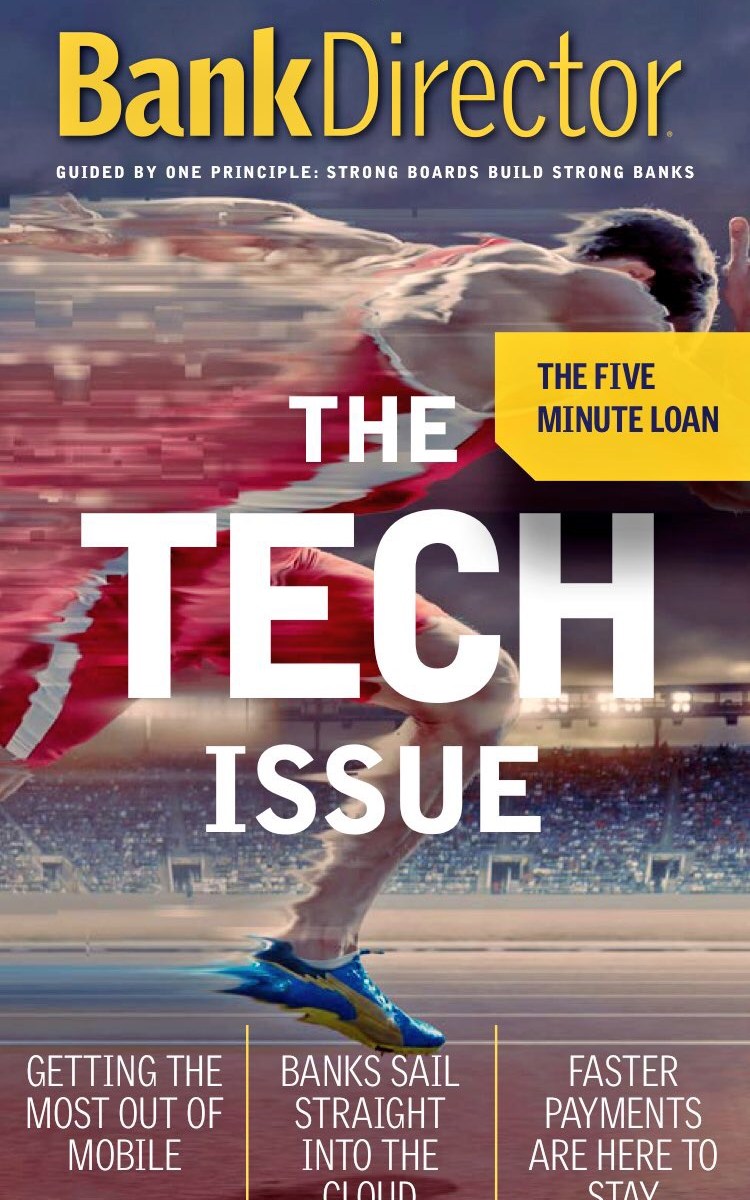
Bank Director’s new Tech Issue

Earlier this week, we published the December issue of Bank Director Magazine, our annual Tech Issue.  Stories range from the changing nature of mobile banking to institutions moving into the cloud to a venture capitalist’s perspective on the future of banking.  I invite you to take a look.

Since starting this blog in 2012, I’ve shared my optimism that the intersection of technological innovation with strong depository franchises may lead to more efficient banking processes, reductions in fraud and a win/win/win for banks, FinTechs and consumers.  So as I read through this current digital issue, a few key takeaways:

  • When San Francisco-based Bank of the West, an $80.7 billion asset subsidiary of BNP Paribas Group, analyzed last year the bottom line impact of customers who are engaged in online banking and mobile banking, it found some surprising results. Digital customers, or those who were active online or on their mobile phones during the previous 90 days, had lower attrition rates than nondigital customers, and they contributed higher levels of revenue and products sold, said Jamie Armistead, head of digital channels at Bank of the West.
  • Automating the small-business lending process requires some deep thinking from boards and management about how much faith they’re willing to place in technology, and their ability to embrace the cultural change implicit in basing lending decisions more on data than judgment. “The marketplace is demanding quicker decisions through technology,” says Pierre Naude, CEO of nCino, a maker of bank operating systems. Bank customers, he says, are clamoring for special products and specialized coding that enable greater automation of the small-business lending process. “Bankers are waking up to the fact that speed and convenience will trump price. You can lose a customer to an alternative lender if you don’t have it.”
  • As our Editor, Naomi Snyder, shares in her welcoming letter, banks tend to have the usual board committees (think audit, compensation and risk).  But we know that few have a board-level technology committee.  So I wonder if 2017 is the year that more institutions decide to create such a group to become better informed and better prepared as the digitization of the banking industry continues?

Concomitant to this issue’s release, Chris Skinner shared his perspectives on the state of FinTech our FinXTech platform.  In his words, “it is apparent that the fintech industry has become mainstream just as fintech investing cools. What I mean by this is that fintech has matured in the last five years, going from something that was embryonic and disruptive to something that is now mainstream and real. You only have to look at firms like Venmo and Stripe to see the change. Or you only have to consider the fact that regulators are now fully awake to the change and have deployed sandboxes and innovation programs. Or that banks are actively discussing their fintech innovation and investment programs… Fintech and innovation is here to stay.”

Clearly, the pace of change in the banking space continues to accelerate.  Accordingly, I encourage you to check out what we’re doing with both Bank Director and FinXTech to help companies who view banks as potentially valuable channels or distribution partners, banks looking to grow and/or innovate with tech companies’ help and support; and institutional investors, venture capitalists, state & federal regulators, government officials and academicians helping to shape the future of banking.

The University of Maryland’s Marketing and Finance Super Day

I’m looking forward to keynoting today’s University of Maryland, Robert H. Smith School of Business’ Marketing and Finance Super Day.  What follows is a sneak peak of my remarks on the intersection of technology with financial services and why FinTech matters to business-school students.

Investments in financial technology have grown exponentially in the past decade – rising from $1.8 billion in 2010 to $19 billion in 2015.  Global investments in financial technology ventures in Q1 2016 were reported to reach $5.3 billion, representing a 67% increase over the same period last year.  Still, profitability remains elusive for many large FinTechs, despite attracting large volumes of customers and creating significant revenue.  So against this backdrop, I developed my remarks for current MBA students and fellow Smith-school alumni.

The opinions I’ll share reflect a number of conversations I’ve had throughout the year.  One, made by Chris Flowers at the International Finance Corporation’s annual FinTech CEO Summit this October, certainly bears mention.  In his words, a bank “is not just a business model, it is a regulatory concept and a social undertaking.”  So as much as some expect recent investments to radically change the nature of banking, I’m far more optimistic that creative new partnerships will emerge that ease payment processes, reduce fraud, save users money and promote financial planning.

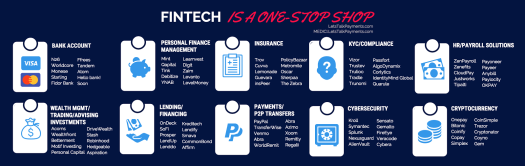
Since this is a more academic audience, my remarks explain how the fabric of the financial industry continues to evolve as new technology players emerge and traditional participants transform their business models.  As part of the school’s Marketing and Finance Super Day, I’ll provide insight into the profound transformations taking place throughout the financial sector while sharing graphics like these from our friends at LetsTalkPayments

bluee

If you’re interested to see the full presentation, I’ll share a link on LinkedIn and Twitter later today after I wrap up my remarks.

Whether They Want To or Not, Banks Need to Open Up

Apart from interest rates, the two biggest issues that bank executives seem to wrestle with are regulatory and compliance costs.  I sense another emerging challenge coming to shore; specifically, how to “open up” one’s business structure in terms of developing partnerships and permitting others to leverage their customer data and/or capabilities.

For bankers, this challenge comes with significant reputation and customer risk.

Now, it is hard to truly disrupt the concept of banking — and I shared this opinion from the stage at Bank Director’s annual Bank Executive & Board Compensation Conference this morning.  However, I did adjust some of my welcoming remarks based on the Consumer Finance Protection Bureau’s position that consumers can control their own financial data, including to let third parties help them manage their finances.  As I learned from Jo Ann Barefoot’s Fireside Chat with CFPB Director Richard Cordray at Money 2020, the CFPB “is not content to sit passively by as mere spectators watching these technologies develop.”  According to his prepared remarks:

Many exciting products we see… depend on consumers permitting companies to access their financial data from financial providers with whom the consumer does business. We recognize that such access can raise various issues, but we are gravely concerned by reports that some financial institutions are looking for ways to limit, or even shut off, access to financial data rather than exploring ways to make sure that such access, once granted, is safe and secure.

Since reading the CFPB’s position, Ms. Barefoot’s recap and the Wall Street Journal’s synopsis, I decided to talk with various bank executives and board members that are here with us at the Ritz-Carlton in Amelia Island about this stance.  As I note in this video, I sense both an ongoing struggle — and a sincere interest — to truly understand the role of technology.  For those I talked with, this is as much about “becoming sticky” to their customers as it is about embracing or defending themselves against “the new.”

##

For more about this year’s conference, I invite you to take a look at BankDirector.com.  Also, a virtual high-five to the team here for a great first day.  You all rock!

_mg_0113

FinXTech’s Advisory Group

I’m checking in from the edge of the Rocky Mountains — from the iconic Broadmoor in Colorado Springs — where I’m joined by FinXTech’s President, Kelsey Weaver and Bank Director’s Director of Client Relations, Laura Proffitt.  The three of us are here to participate in the Association for Financial Technology’s (AFT) Fall Summit where later today, I will have the opportunity to introduce a new partnership between AFT and FinXTech.  In advance of those comments, I thought to pull the curtains back on a special  Advisory Group that we are building to develop FinXTech in the “best” possible manner. 

As new approaches to delivering financial services emerge, nearly every technology company here in Colorado has practical tools, techniques and talent to help financial institutions prepare for the future.  It is an exciting time to be part of a community like the one AFT draws, as I believe new players will continue to emerge while traditional participants transform their underlying business models to better participate and compete in the coming years.

As the financial industry continues to evolve, so too does the community that my team supports.  As a peer-to-peer based platform powered by Bank Director, FinXTech connects a hugely influential audience around shared areas of interest and innovation; specifically:

  • FinTech companies who view banks as potentially valuable channels or distribution partners;
  • Banks looking to grow and/or innovate with FinTech companies’ help and support; and
  • Institutional investors, venture capitalists, state & federal regulators, government officials and academicians helping to shape the future of banking.

Rather then create this community in isolation, we are doing so with the help and support of industry leaders with various backgrounds.  Case-in-point, we are recruiting highly opinionated, ridiculously informed thought leaders to “think around the corner” with us as part of FinXTech’s Advisory Group.

So as we get ready to spend a few days with our peers at this week’s conference, Kelsey, Laura and I are proud that the following men and women have accepted our invitation to share their time and intelligence with us as part of FinXTech’s council:

  • Thomas P. Brown, Partner, Paul Hastings LLP
  • Michael Butler, President & CEO, Radius Bank
  • Michael M. Carter, Founder & CEO, BizEquity
  • Ryan Gilbert, General Partner, Propel Venture Partners
  • John C. Gill, Chief Operating Officer & Chief Risk Officer, Somerset Trust Company
  • Joe Guastella, Global & U.S. Managing Principal, Financial Principal, Deloitte Consulting LLP
  • James C. Hale, III, Founding Partner, FTV Capital
  • Aditya Khujekar, CEO & Co-Founder, Let’s Talk Payments
  • Jimmie Lenz, Director of Technology Risk, Wells Fargo, Wealth and Investment Management
  • Vivian Maese, Partner, Latham & Watkins
  • Bill McNulty, Entrepreneur in Residence, Capital One
  • John E. Pizzi, CEO, BaseVenture
  • Gregg M. Schoenberg, Founder, Westcott Capital
  • Chris Skinner, CEO, The Finanser Ltd
  • Christa Steele, Former President, CEO & Board Member, Mechanics Bank; Founder, Boardroom Consulting LLC
  • John Thompson, SVP & Leader, Program Team, CFSI
  • Andres Wolberg-Stok, Director, Citi Fintech
  • Jon Zanoff, Founder, Empire Startups

In addition to this awesome group, we have some pretty powerful folks that we recently invited (so this list can and will expand in the coming weeks).  But for those of you here at AFT, you will hear Kelsey, Laura and me talk about our enthusiasm for this group & the efforts being made to establish FinXTech as a catalyst that (1) connects a highly influential group of people who care about the future of financial services, (2) are committed to meaningful transformation and are (3) empowered to make change happen.

##

To learn more about what we’re doing, I invite you to visit FinXTech.com, a site we designed to deliver authoritative, relevant and trusted content for banks, Fintech companies, investors and services firms.

Can Banks Keep Up?

As the financial industry adapts to various digitization trends, my team continues to field inquiries from bank CEOs and their executive teams specific to emerging technology strategies and opportunities.  One way we attempt to benchmark current interests (and concerns): an annual research project.  This year, we evaluated industry attitudes toward core providers and fintech firms, including marketplace lenders like Lending Club, in our just-released Bank Director Technology Survey.  While a number of findings jumped out at me, three really caught my eye:

  • Eighty-one percent of bank chief information officers and chief technology officers responding say that their core processor is slow to respond to innovations in the marketplace, making it even more difficult for the banking industry to keep up with shifting consumer expectations regarding technology.
  • Thirty percent of bank CIOs and CTOs report that their bank has pulled back on plans to integrate a more innovative product, service or delivery channel due to the inability or unwillingness of the bank’s core processor to support that activity.
  • Banks are highly reliant on core providers for services beyond core processing, which at its most basic contains vital customer data and processes all customer transactions. Ninety-six percent of respondents say their bank uses their core provider for additional services, including mobile banking (71 percent) and bill pay (75 percent).

Our 2016 Technology Survey, sponsored by the technology solutions provider CDW, reflects the opinions of 199 board members and senior executives of U.S. banks surveyed in June and July.  The size of institutions polled fell between $250 million and $20 billion in assets.  In addition to the points shared above, we found:

  • Thirty-one percent of respondents have converted their bank’s core technology within the past five years. Forty-two percent converted their core more than 10 years ago.  Respondents report that their bank works with a median of five technology firms, including the core provider.
  • Sixty-one percent of participants see fintech firms as both competitors and partners.
    Online marketplace lenders should be more heavily regulated, say 60 percent of respondents. Forty-one percent worry that they’ll lose loans to these lenders, but 18 percent don’t think these lenders have long-term viability.
  • Opinions are mixed on the impact that blockchain—the underlying technology behind the digital currency bitcoin—will have on the banking industry. Twenty-four percent believe it will impact all banks. However, 57 percent don’t understand blockchain enough to form an opinion, or have never heard of the technology.

Finally, cybersecurity continues to loom large.  Having a strong technology infrastructure in place to protect against cyberattacks remains the top technology concern for survey participants, at 72 percent.  Seventy percent indicate that their bank could better use data to serve the needs of existing customers, or identify new customers.  Seventy percent of respondents believe that technological innovation is a priority for their board, but less than half discuss technology at every board meeting.  Thirty-four percent of respondents describe themselves as early adopters of technology.

The full survey results are available online at BankDirector.com, and will be featured in the 4th quarter 2016 issue of Bank Director magazine.

Creating Better Banking Experiences

Earlier this week, we published our quarterly print issue of Bank Director magazine.  If you haven’t seen it, our talented editor, Naomi Snyder, shines a light on the “tech bets” being made by Fifth Third, a $142 billion asset institution.  Having worked for an IT firm, I appreciate the three questions their President & CEO, Greg Carmichael, asks his team to consider before investing in new technologies:

  1. Does it improve the bank’s ability to serve customers?
  2. Does it drive efficiency?
  3. Does it create a better experience for customers?

As he shares, “not every problem needs to be solved with technology… But when technology is a solution, what technology do you select? Is it cost efficient? How do you get it in as quickly as possible?  You have to maintain it going forward, and hold management accountable for the business outcomes that result if the technology is deployed correctly.”

“The challenges are how to grow the franchise and reposition the franchise to serve our customers in the way they want to be served, which is more of a digital infrastructure.”

-Greg Carmichael, President & CEO, Fifth Third Bank

While Fifth Third plans to invest some $60M this year in technology, Naomi notes that the bank doesn’t have an R&D lab with a staff separated from the rest of the bank and dedicated to inventing things (like its competitor U.S. Bancorp).  Nor does Fifth Third have the reputation of being highly innovative, like a BBVA.  Nonetheless, the regional bank, headquartered in Cincinnati, has a laser focus on developing practical solutions to everyday problems.

So to build on this issue’s cover story — and the efforts we’re making with our FinXTech platform — let me offer my take on who I consider standouts in the payments, lending and retail space today.  Those addressing “everyday problems” may find inspiration from the work being done and/or want to explore partnership opportunities.

Payments + Transfer

When one thinks about payments — and the movement of  value via cash, credit card, check and other transactions — some big names come to mind: Apple Pay, Chase Pay, Square, Paypal, etc.  But don’t sleep on these companies:

Lending

In the lending sector, a lot of people continue to talk about LendingClub’s travails, scoff at SoFi’s change of heart from anti-bank to pro-partnerships and follow Prosper’s efforts to shore up its business.  Within the lending space, these companies also deserve time and attention:

  • Affirm, a digital lender that provides installment financing;
  • Orchard, a technology and infrastructure provider for marketplace lending;
  • Lendio for small business loans;
  • Even, a new kind of financial app that turns variable pay into a steady, reliable income; and
  • Earnest,  a technology-enabled lender that enables one to consolidate and refinance  student loans.

Retail banking

Considering the core functions of retail banking remain the establishment of deposits and making of loans, those pushing the envelope in a way consumers desire include:

  • Ally Bank, known for its “No Branches = Great Rates” tag line;
  • Atom Bank, one of the first Challenger Banks in the UK;
  • Tandem, a new digital bank in the UK;
  • Moven, a pioneer in smart phone banking; and
  • Simple, part of the BBVA family that is reinventing online banking.

While these banks are pushing forward, many legacy institutions will be challenged to meet the expectations of their customers.  They will need to assess the additional risks, costs and supervisory concerns associated with providing new financial services and products.  Accordingly, I’m not alone in believing that financial institutions need to invest in services “for life’s needs” through collaboration and partnerships with companies like those shared in today’s post.

##

I realize there are a number of companies “doing it right” in these three sectors – and this simply highlights some of the players that standout to me.  Feel free to comment below on others that I might highlight in future posts.

Without A Destination, What Good Is A Map?

Highlight: as executives grapple with a fast-changing operating environment that requires partnerships and collaboration, many wrestle with where they want to be vs. where they need to be.

In this video, I share my thoughts on growing through partnerships (between traditional banks and financial technology firms), becoming “data richer” and enhancing the customer experience you’re delivering.

FWIW, this video lives on FinXTech.com, a site designed to provide authoritative, relevant and trusted content to a hugely influential audience, specifically:

  • Fintech companies who view banks as potentially valuable channels or distribution partners;
  • Banks looking to grow and/or innovate with fintech companies’ help and support; and
  • Institutional investors, venture capitalists, state & federal regulators, government officials and academicians helping to shape the future of banking.

As a platform powered by Bank Director, FinXTech connects this hugely influential audience around shared areas of interest and innovation.  FinXTech specializes in (1) bringing valuable bank relationships to fintechs, and (2) offering banks valuable relationships with fintechs in a way no one else does.

The Convergence of Bob Dylan and Banking

Some of the most visible innovations in the banking world today are platform-based, data intensive and capital light.  Personally, I’m just as encouraged by “incumbent” institutions supporting new fintech entrants — with infrastructure and access to services — as I am creative new companies (like Nymbus, nCino, etc.) providing smaller and mid-sized banks with sophisticated new capabilities.

This video, filmed during Bank Director’s annual FinTech Day in New York City at the Nasdaq Marketsite, is but one of eight videos we’ve shared on BankDirector.com.  To see what industry leaders from Silicon Valley Bank, the Fintech Collective, BizEquity, DaonDeloitte Consulting and the World Bank’s IFC think are the challenges & opportunities facing traditional banks, I invite you to take a look at this compilation of videos FinTech Day Recap: Rapid Transformation Through Collaboration.

##

Al Dominick is the President & CEO of Bank Director, a privately held media & publishing company designed around strategically important business issues that a CEO, executive and/or board member(s) need to know — and be prepared to address. An information resource to the financial community since 1991, we publish Bank Director magazine, host conferences like “Acquire or Be Acquired,” conduct board-level research, provide board education & training programs, run BankDirector.com… and recently launched FinXTech.